Showing posts with label supercars. Show all posts

Wednesday, 19 June 2019

Why We Really Need Supercars

Your daily commute wouldn't be the same without them.

Supercars seem rather illogical in today’s speed-limited, over-regulated, nanny-state environment. Yet there are more of them about than ever before. Established manufacturers are expanding their ranges and niche supercar manufacturers are popping up practically daily. So, if they are too fast, too loud and too impractical for public roads, what is the point of them anyway? Aside from the irrational desire to own one there are a number of practical reasons that they exist too.

Efficient Engines

Massive power outputs and huge consumption figures go hand in hand with most supercars, yet when taking the fuel economy numbers in the context of the power being produced their relative efficiency is actually rather good. For example, the base 2.5-liter Nissan Altima makes 179hp and gets an impressive 38mpg on the highway, yet the Ferrari 488 GTB which makes 661hp still manages 22mpg.

Now our man math may be a bit rough but that seems like a comprehensive win for the Fezza. Even without resorting to scientifically suspect comparisons, the advanced tech in supercar engines can only be good for the industry. Just look at the Alfa Romeo Quadrifoglio, it uses a 6-cylinder version of the very same engine in the 488 and makes more power than any of its similarly sized German rivals.

Brakes That Brake

The need for efficient braking performance in extreme situations is paramount in racing and vital in a fast road car. The disc brake may not have debuted on a supercar since that term didn’t come into use until much later, but it is in cars like the fastest 1950’s Jaguars and Triumphs that the system was truly put to the test.

Issues, like eliminating brake squeal and optimizing braking performance in a variety of conditions, are partly due to the development work put into the braking system by supercar manufacturers. Carbon Ceramic brakes are the next technology that will be filtering down to the mainstream market, offering a longer life, consistent braking performance, and a lower weight; the kinks of this set up have slowly been ironed out in supercars.

Suspension Design That Works

In the past, the vast majority of supercars tended to have rock-hard suspensions that were brilliant on smooth surfaces but would knock your spine out of alignment on real-world roads. Yet in recent years, supercars like the latest McLarens can offer a ride as good as most family sedans while still being able to corner and respond like a thoroughbred sports car.

This tech will filter down to mass-produced cars in due course but even now you will be reaping the benefits of the lessons learned from supercars of a decade ago in your current car. The 18 and 19-inch wheels on your car today would have made for an unbearably hard ride 10 or 15 years ago.

Aerodynamic Optimizations

The dark art of aerodynamics has become a lot lighter in recent years, but it took decades of experimentation to get to where we are today. Where the height of downforce technology used to involve a massive wing and some pop-up headlights, today’s supercars use movable wings, ducts, and flaps controlled by complex electronics. The Pagani Huayra uses just such a setup and electric rear spoilers are now fitted to road cars like the BMW 3 Series GT and Porsche Panamera. Smooth undertrays and active grille shutters have now been adapted to help lower fuel consumption and lower drag.

Increased Overall Efficiency Through Competition

Just like in racing, engineers developing supercars need to get creative to gain a competitive advantage over the rest of the field. Active aerodynamics and ground effects may seem a bit much for your Camry, but a quick-shifting gearbox and intelligent traction control system make a lot more sense.

Hybrid and electric supercars are also great testbeds for how this tech will work in extreme conditions making for more effective powertrains in future road cars. All those incremental improvements in the running gear add up and your sedan today is far more efficient than a comparable model from 20-years ago. Some of that improvement comes from lessons learned in supercar development.

Safety And Tech Development

Now, sharp readers will quickly point out that most new safety systems appeared first on luxury cars like the Mercedes-Benz S-Class and BMW 7-Series, but they are not the only ones to have introduced cutting-edge tech into mainstream vehicles. Supercars test existing tech to its limits, while revolutionary cars like the Porsche 959 debuted tech like Runflat tires and proved that an aluminum and Kevlar chassis could be both very light and extremely rugged.

Exotic Materials

Carbon fiber, aluminum, Kevlar and exotic composites all tend to be used first in supercars. The McLaren F1 was one of the first road cars ever to feature a carbon fiber tub. Lessons learned from McLaren’s Formula 1 program helped but it still took 4,000 hours to build each shell.

By the time the MP4-12C came about in 2011, that build time was down to just four hours. That means that the benefits of lighter weight and stronger impact resistance that this technology affords is that much closer to being fitted to your next car. In fact, if you happen to be driving a BMW i3, then it already is.

We All Like To Dream

Not everything in life needs to be anchored in practicality and logical reasoning, we are human after all. While a supercar may not quicken everyone’s pulse in the same way, we all sometimes need something that defies reason and is desirable just for its emotional and aspirational attributes.

The halo effect of models such as the Lexus LFA, Acura NSX and BMW i8 all filter down to the rest of the range, and even if you will never own one, there is a certain pride in knowing that your daily-driver shares the same showroom space with something a little exotic.

The Need For Speed

For as long as the motorcar has been in existence there is a man or a woman trying to go faster, be better and quicker than the next guy or girl. Supercars like the Dodge Challenger SRT Demon exist solely for this very reason. The Bugatti Chiron is much of the same, yet the lessons learned from getting cars like this to reach new heights have made modern sedans smoother and quieter at speed. Going 250 mph may seem ludicrous but so did going 100 mph 70-years ago.


View the original article here

Saturday, 11 May 2019

Are 1980s Supercars Better Than Their Modern Counterparts?

Can a 1980s sports car still be as desirable to own as its modern equivalent?

‘80s nostalgia is as strong as ever, moneyed Millennials and Generation Xers are now able to actualize those childhood fantasies of driving around Miami in a white Ferrari. It’s all about retro, and the fascination with supercars of this era has seen classic car prices rocket skywards year after year. But are they really that great when compared to today’s technology-packed offerings? Can a 30-year-old Porsche or Lambo really be that much more desirable to own or are they really just a bunch of old cars thriving on the popularity of a nostalgic generation?

Ferrari Testarossa

Let’s start off with one of the most iconic cars of the ‘80s, the Ferrari Testarossa. Those side strakes and wide rear track look just right even three decades on and while it may only offer 390-hp from its 4.9-liter flat-12 engine, the way it wails to the redline as you click-clack through the classic steel manual gaiter makes the experience feel just about perfect. The 0-60 mph time of around 5 seconds is still quick but your lasting memory will be the sights, smells and sounds from every drive.

Ferrari 812 Superfast

The 812 Superfast is the most advanced GT Ferrari has ever produced. It uses a development of the F140 V12 used in the LaFerrari but in this application, does not use any electric assistance. There is little need as it produces a simply astounding 800 hp from 6.5-liters, a naturally-aspirated record and twice the amount of the Testarossa. Road testers have confirmed what you may already suspect, it is a ballistic missile on the road with handling to match. This massive power output and very direct responses can make it a bit more twitchy and nervy on the long trips that a GT is meant for. Perhaps there is such a thing as too much power.

Porsche 911 Carrera 3.2

Porsche has been building the 911 since 1963 and due to a lack of funds and a plan to axe the range entirely, the 1980s Carrera was not much more than a mildly updated model. Yet, despite its decidedly outdated interior and tail-happy handling, customers refused to let it die. The constant fettling made the final Carrera 3.2 models the most rounded but all have a unique character that is distinctly missing from modern sports cars. Many have been modified and restored in recent years and prices are continually rising.

Porsche 991 Carrera

A lot has happened at Porsche since the ‘80s. the latest 911 is now water-cooled and turbocharged and most are fitted with dual-clutch automatic transmissions. No longer can you swap parts between the various generations, as was the case right up to the last 993 models, but the levels of performance are on another level. The base Carrera makes 370 hp and gets to 60 mph in 4.4 seconds. That's a fair bit quicker than the ‘80s 930 Turbo and it won’t hurl you into the scenery around every corner either. Yet this very refinement and capability robs the new 911 of that raw excitement that punctuated each spirited drive in the old cars.

Lamborghini Countach

Lamborghini is all about raw excitement. Its early cars were essentially engines wrapped in some pretty bodywork and the angular and aggressive lines of the Countach must have looked simply amazing at its launch in 1974. The ones most people remember though are the updated ‘80s variants, the LP500s with their huge wings and aero add-ons. They may be difficult to drive slowly, hard to see out of and uncomfortable on long trips but you won’t care once you experience the intoxicating noise from that big V12 as it gulps gallons of gas through its carbs with each prod of the throttle.

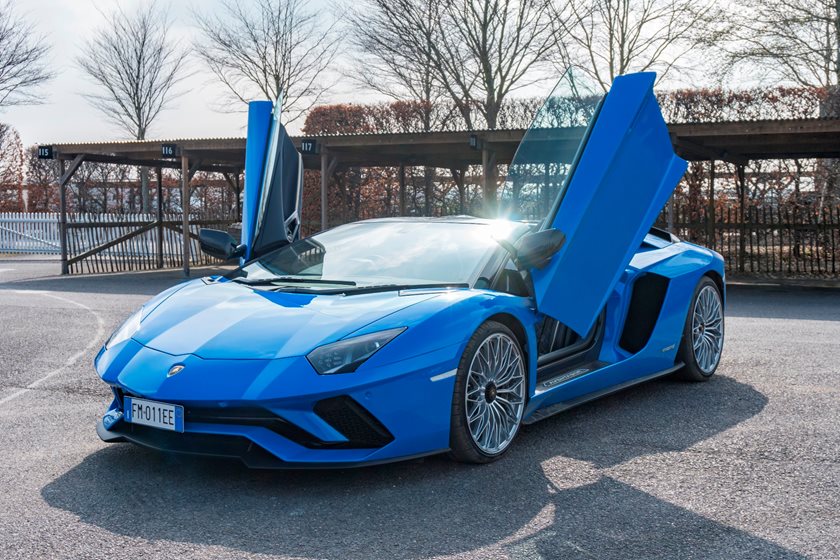
Lamborghini Aventador

The Aventador is the latest in a long line of flagship Lamborghini V12. The engine may be an all-new design but it has stuck pretty close to the recipe that made the Countach such a success in the first place. It looks like a jet-fighter, doesn’t bother with turbochargers and you still can’t see out of it properly. It is a whole lot easier to drive though and blue flames come out of the exhaust too. This is the modern supercar for the nostalgic older connoisseur who just doesn’t have the leg strength to operate a Countach’s clutch anymore.

Chevrolet Corvette C4

American sports cars have long been dismissed as straight-line specialists, equipped with big engines that could smoke the rear tires at every traffic light but hamstrung by chassis that were better suited to wafting than cornering. The Corvette C4 was one of the first cars to challenge this stereotype. Early models were perhaps a bit underpowered with only 250 hp on offer but the introduction of more powerful engines and the superb ZR-1 in early 1990 made the updated C4 a formidable competitor. During the ‘80s however it was mostly those sharp looks and decent handling that made them popular.

Chevrolet Corvette C7

The latest Corvettes have moved the game on massively and the C7 is now a superbly balanced sports car with acceleration to match and oftentimes beat anything from Europe. The top supercharged ZR-1 makes 755 hp (compared to the C4 ZR-1's 375 hp) and can lap race tracks faster than much more expensive exotics. The old car may have the more elegant looks but even the most jaded ‘80s sportscar fan will have to admit that in this case, the modern Corvette is the one to have. Now if we were talking about a C1 or C2, then things may have turned out different…

BMW M1 vs i8 vs M8

BMW may have built a lot of sports cars in its time but actual supercars are rather thin on the ground. The mid-engined M1 has been the sole attempt so far, its 3.5-liter inline-6 and finely balanced chassis gave it the ability to frighten the established players in its day. The i8 is arguably the next step in the evolution of the supercar and its hybrid powerplant is superb but it does take some getting used to. The upcoming M8 is perhaps a more traditional take on the genre, until then, the ultra-rare and gorgeous M1 will do very nicely.

Mercedes 190E vs Mercedes-AMG C63

Mercedes made a few stabs at the supercar segment, the jointly designed SLR Mercedes-McLaren and its own SLS were pretty impressive. Back in the ‘80s though, the 190 E Cosworth was one of Mercedes’ sportiest small sedan offerings. The updated 2.5-liter models made 204-hp, which was plenty for its time, and have today become desirable modern-classics. A base 241-hp Mercedes C300 will easily outrun the old-timer these days though and the 503-hp C 63 S is quick enough to take on actual supercars. It is also superbly comfortable and safe but in terms of retro charm and rarity, the 190E has it beat. The choice is yours.

Lamborghini LM002 vs Urus

The Urus may have upset traditionalists when it was recently announced but not many people remember that Lamborghini has been here before, in the form of the LM002. In some ways, that crazy army-derived original with its Countach V12 and massive off-road tires seems more acceptable 30-years after it was introduced and perhaps we will look at the Urus in a similarly fond way in the years to come. For now, though, the thought of a sporty Lamborghini SUV still takes some getting used to, however fast it may be. The LM002 remains is still the winner here.

Who Wins?

In the rarefied world of high-value supercars, practical considerations like outright performance, daily usability and the latest safety and tech features are outweighed by more whimsical attributes like how it makes you feel. When viewed from that perspective, even those not swayed by nostalgia will concede that the prospect of heading out on an early Saturday morning drive in a rare Lamborghini Countach is that much more special than doing the same in a modern equivalent. So, the new batch of supercars may be miles better on paper, but it’s the old-school cars that provide the more memorable experience on the road.


View the original article here

Tuesday, 1 January 2019

R&B Singer The Weeknd Has A Drool-Worthy Collection Of Supercars

Yes, his McLaren P1 is cleaner than your church shoes.

Turn on the radio to any pop, hip hop or R&B station and there’s a good chance that you’ll hear “Starboy” by The Weeknd. You might be tempted to immediately change stations due to the fact that the song is played a million times an hour. But if you resist that temptation, or if you just love the song, give it a close listen and you’ll notice something: The Weeknd loves fast cars. Rockers, rappers and singers have always professed their love for cars in song, but Abel Makkonen Tesfaye has a collection that actual car people (like us) would approve of.

In “Starboy,” The Weeknd sings about his McLaren P1, Lamborghini Aventador SV Roadster and Bentley Mulsanne. Yes, The Weeknd owns a P1 and Aventador SV! All three of the cars are seen in the music video for his new single, and the P1 even gets taken for a spin out on Los Angeles’ Mulholland Drive. Many rappers talk about owning fast cars but their tastes usually seem a bit basic. Pulling off the lot in an Aventador is certainly cool, but it takes a bit of a gearhead to seek out an Aventador SV. Same for the P1. We don’t doubt The Weeknd has money but the English hypercar is still a massive investment. One of his lyrics says it cost him “a milli point two,” while another lets listeners know that “none of these toys on lease too, ah.”

A bit of Internet sleuthing revealed that the R&B crooner also owns a Mercedes-AMG G63. If “all” he owns are these four cars that means his garage houses almost 3,000 horsepower and is worth north of $2 million bucks. Again, we’ve seen bigger and more expensive collections but something tell us The Weeknd A: puts thought into the cars he buys and B: actually drives them. We’d do the same thing if we were in his $1,000 shoes. P1 and Aventador SV photos by @abelxo for Celebrity Cars Blog.