Showing posts with label plugin. Show all posts

Monday, 9 September 2019

BMW X3 Plug-In Hybrid Will Have Hot Hatch Levels Of Power

It will also have a pretty usable electric range.

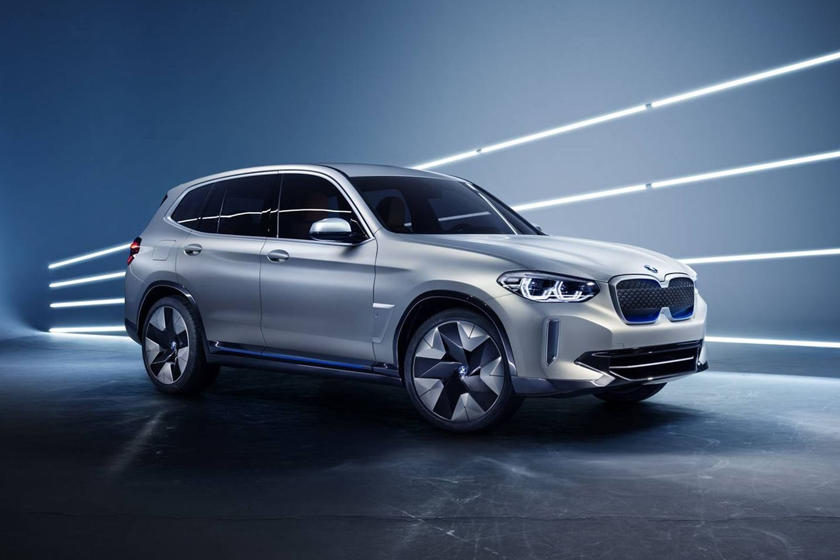
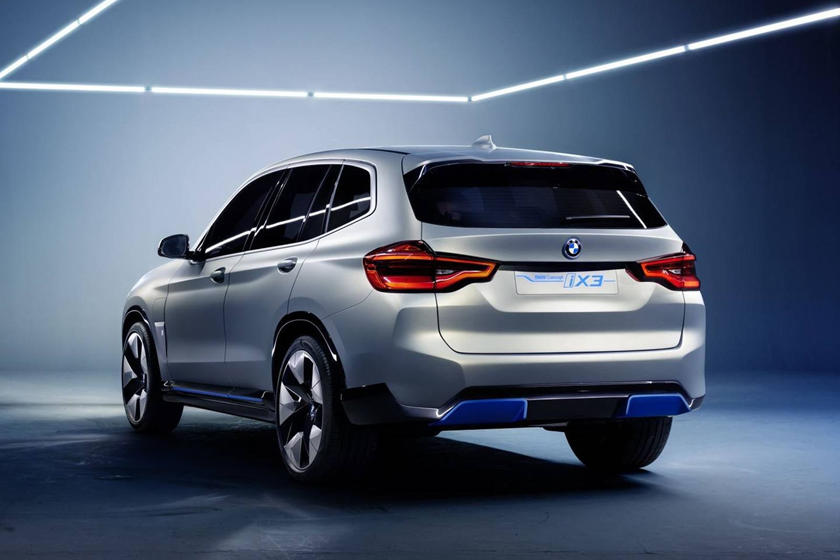
Earlier this year, BMW revealed its iX3 concept, an electric SUV to battle the Jaguar I-Pace and upcoming Mercedes EQC. We've since seen the iX3 conducting cold weather testing, and expect it to come with around 275 horsepower and a range of around 250 miles. Not to be confused with the all-electric iX3, BMW is also working on a plug-in hybrid version of the X3 which could arrive before the electric version. Early rumors indicated that the plug-in model would be available with either 252 or 326 hp, but BMW Blog insists that the car will have even more power.

Inside sources in Munich say that the base plug-in model will be known as the X3 xDrive30e. It will share a 2.0-liter four-cylinder turbo engine mated to an electric motor with the upcoming 330e sedan. The X3 plug-in will likely be launched as a 2020 model with 275 hp and 295 lb-ft of torque and an electric driving range of 30 miles. This means that if your commute is less than 15 miles, you'll be able to make it to and from work without having to use a drop of fuel. An xDrive40e version with around 326 hp is also in the cards.

We love the idea of a plug-in hybrid. Being able to drive on electric power alone, then call in the might of a gas engine on demand is a very exciting concept. The Kia Niro plug-in is one of our current favorite plug-in hybrid SUVs, but this X3 plug-in could easily take the shine away from the humble Kia (of course, at a much higher price). We are excited to see the full reveal of the plug-in X3, which will likely be next year in 2019. BMW will follow it up with the all-electric X3 later in 2020 or 2021.

Thursday, 15 August 2019

BMW's New 3 Series Plug-In Promises Longer Range

Expect the BMW 330e iPerformance plug-in hybrid to reach US dealers in 2020.

BMW has so far only shown us the conventional versions of its new 3 Series. But there's a new plug-in hybrid version coming. And it's expected to travel a third farther on electric power alone than the outgoing version.

According to InsideEVs, the new BMW 330e iPerformance plug-in hybrid sedan will boast 37 miles of all-electric range before needing to rev up its internal-combustion engine. That's by European standards, so given the 14-mile range certified by the EPA for the outgoing version, we're expecting about 19 miles by US standards for the new model, which will boast a combined 248 horsepower, or up to 288 hp on overboost.

That'd make it more powerful than the conventional 330i (which offers 255 hp), but less than the M340i performance version (with its 382 hp). Expect it to reach 62 miles per hour from a standstill in about six seconds flat, or just a couple of ticks behind the 330i's quoted 5.8-second sprint (thanks to the extra weight).

The new output and performance figures closely mirror those of the outgoing 330e iPerformance, which didn't have the XtraBoost function. But the emphasis here is clearly more on increasing range rather than performance. Still, it ought to compare fairly well to the competition.

Mercedes-Benz's C350e packs a combined 275 horsepower (in between the standard and boosted output of the new 330e) for a 5.8-second 0-60 time and a European range of 19 miles – exactly what we're expecting for the new Bimmer. While Volvo has yet to release full specifications, it has clearly taken a different (and more potent) approach with its new S60 T8 Twin-Engine plug-in hybrid, which boasts 400 horsepower (415 hp in performance-oriented Polestar Engineered spec).

Expect the latest BMW 330e iPerformance to launch in German next summer and begin reaching US dealers sometime in 2020.

(function(w,d,s,l,i){w[l]=w[l]||[];w[l].push({'gtm.start':new Date().getTime(),event:'gtm.js'});var f=d.getElementsByTagName(s)[0],j=d.createElement(s),dl=l!='dataLayer'?'&l='+l:'';j.async=true;j.src='https://www.googletagmanager.com/gtm.js?id='+i+dl;f.parentNode.insertBefore(j,f);})(window,document,'script','dataLayer','GTM-MJCGS3N');var _comscore = _comscore || [];_comscore.push({ c1: "2", c2: "28140907" });(function() {var s = document.createElement("script"), el = document.getElementsByTagName("script")[0]; s.async = true;s.src = (document.location.protocol == "https:" ? "https://sb" : "http://b") + ".scorecardresearch.com/beacon.js";el.parentNode.insertBefore(s, el);})();

Monday, 22 July 2019

BMW X3 And X5 Plug-In Hybrids Coming Next Year

Both models should deliver an electric range of around 30 miles.

The BMW X3 was redesigned for the 2018 model year and has been very well received. Compared to the old model, sales are up by 60 percent so the future is looking bright for the compact crossover. One common complaint, however, is the limited choice of engine options. In the US, there are only two trims available: the 30i, which is powered by a 2.0-liter turbocharged engine delivering 248 hp, and the more potent M40i, which has a 3.0-liter turbo six-cylinder unit with 355 hp.

That will soon change, however, as we’ve known for a while that BMW is working on a plug-in hybrid version of the X3, as well as the fully electric iX3. If you’ve been waiting for BMW to launch a more economical version of the X3, we have good news for you.

BMW’s CEO, Harald Kruger, has confirmed to BMWBlog that the first ever BMW X3 plug-in hybrid will arrive next year alongside the new plug-in hybrid X5. The plug-in hybrid will serve as an alternative to the fully electric iX3, which is expected to go on sale in 2020.

When it arrives, the X3 plug-in hybrid will use the same powertrain as the 330e plug-in hybrid sedan. That means it will have a 2.0-liter four-cylinder gasoline engine paired with an electric motor positioned between the engine and gearbox producing a combined 275 hp.

The new X5 hybrid, on the other hand, will have a more powerful 3.0-liter six-cylinder engine under the hood and an electric motor delivering around 390 hp. The electric driving range for both models hasn’t been confirmed, but BMWBlog claims it will be closer to 30 miles in real life scenarios, which will be a significant improvement over the X5 xDrive40e.

Tuesday, 2 July 2019

Bentley Reveals More Plug-In Hybrid Models Are Coming

Every model in the lineup will get a PHEV version.

In these socially responsible times, even ultra-exotic manufacturers are worried about emissions and fuel economy standards. Some have have embraced fully electric cars, but others feel that plug-in hybrids are a nice bridge until EV technology is perfected. Bentley is the latest company to embrace hybrid technology as company CEO Wolfgang Duerheimer pointed out at the 2017 Automotive News World Congress in Detroit. Duerheimer said “From my point of view, plug-in hybrid technology provides the best of two worlds.”

Bentley prefers plug-in hybrid vehicles (PHEVs) over EV models because they would allow owners to drive in city centers where gas and diesel powertrains are restricted. They are also capable of going on extended road trips, without the need for lengthy charging stops. Duerheimer believes that the gas engine will be a part of Bentley's DNA for a while. “To cover long distances and to make it from one city to another, and travel long distances in the US, I think the combustion engine will follow us for a long time,” Duerheimer said. The first Bentley model to get a plug-in variant will be the Bentayga in 2018. The next-generation Continental GT will also get a plug-in model after the W12 model premiers and before the V8 debuts.

The plug-in Continental GT will likely use a V6 engine which matches the current output of the V8 model (500 hp). The next generation of Bentley models may benefit from engineering by Porsche, but plug-in hybrid models seem to be a significant piece of the company's future. The Bentayga already has a more efficient diesel variant, but it is clear that the Volkswagen group will move towards hybrids and away from diesels.

Tuesday, 25 June 2019

2018 BMW 3 Series Plug-in Hybrid Review

The 3-series Plug-in Hybrid is BMW’s current eco-friendly offering in its sporty luxury sedan range. It has been on sale since 2016 and whereas its predecessor, the ActiveHybrid 3 was based on the performance oriented 335i, this model shares some of its running gear with the more efficient base 320i.

The 330e iPerformance Plug-in Hybrid has received the same updates for 2018 along with the rest of the 3-series range which means an update infotainment system and minor trim changes.

What’s it like inside?

Stepping into this hybrid it is clear that BMW is using a different approach from its stylistically futuristic i3 and i8 sub-brands. Save for a few additional dashboard dials, the interior of the Plug-in 3-series looks very much like the rest of the range.

The quality levels are up there with the best in class, minor controls and buttons are laid out in the usual logical BMW manner.

The battery pack is situated beneath the trunk so passenger space is identical to the gasoline powered cars and there is ample space for occupants in the front and the rear. The slightly reduced cargo space is still more than acceptable and the rear seats still fold forward to increase load space if required.

2016-2018 BMW 3 Series Plug-in Hybrid Driver Area How does it drive?

The additional weight of the hybrid running gear does dampen the overall agility of this 3-Series and while it handles corners and bumpy roads with impressive poise and balance, there is little of that traditional driver focused feeling.

The drivetrain allows for short periods of pure electric driving and the transition to the gasoline engine is unobtrusive enough, the transmission is also smooth and capable in most conditions. The cabin is a quiet place and it needs to be as the buzz of an internal combustion engine is not always on hand to mask potential creaks and rattles.

An available smart navigation system will pre-assess a route and manage the battery charging and gasoline/electric powertrain split to optimize the fuel consumption.

2016-2018 BMW 3 Series Plug-in Hybrid In Motion What about the performance?

The 330e iPerformance is equipped with a turbocharged 2.0-liter four-cylinder engine which is combined with an electric drivetrain to produce a total of 248 horsepower and 310 lb-ft of torque. An 8-speed automatic transmission and rear-wheel drive are standard.

Equaling the 330i on power output, the heavier 330e gets to 60mph in 5.9-seconds versus 5.5. So, it may trail the conventionally powered 330i but against other hybrids this is a class-leading result and while consumption is heavily driver and situation dependent, a combined 71eMPG figure comprehensively outguns the 330i’s 34 mpg.

Light-footed driving in the Max eDrive mode will keep the car in full electric mode up to a speed of 75mph and a range of 14 miles in this mode is claimed under ideal conditions. There is not much power available in this mode and a heavy prod of the throttle will have the gasoline engine jumping into life to help out.

Charging can be done either at home overnight or much faster at a dedicated charging station, the Save Battery driving mode also allows the engine to maintain the battery at 50% charge although this will lower fuel economy levels.

2016-2018 BMW 3 Series Plug-in Hybrid Information Menu What are my options?

The 330e is available in one basic trim option that can be specified in either Sport Line, Luxury, Shadow Sport Edition and M Sport Design packages. All offer various visual differences and minor detail changes excepting the M Sport option which adds also includes, sporty suspension a sunroof and comfort access.

Standard equipment includes power front seats, climate control and cruise control and a number of options are available either as part of a Convenience, Premium or Executive tier or individually. Notable items include a head-up display, adaptive cruise control, Harman Kardon surround audio system and Apple Car Play functionality.

The Driving Assistance Package is a notable available extra and includes frontal collision and pedestrian warning, lane departure warning and automated braking systems.

2016-2018 BMW 3 Series Plug-in Hybrid Dashboard The Verdict

The integration of hybrid technology into the existing 3-Series platform has potentially yielded the most fuel-efficient model in the range, although in real-world driving conditions the highly efficient gasoline and diesel variants may be the 330e’s biggest challengers.

A slightly numb driving experience also detracts from what is an otherwise impressive package, but once again these strengths are also available in the rest of the range and at a lower price, making the 330e a bit of a niche offering.

2016-2018 BMW 3 Series Plug-in Hybrid Front Side in Motion 2016-2018 BMW 3 Series Plug-in Hybrid Rear Side in Motion

Monday, 10 June 2019

These Are The Best Selling Plug-In Hybrids And EVs Of 2018

People really love these plug-in hybrids and electric models.

Electric vehicles and plug-ins are becoming more and more mainstream, while the incoming wave of luxury EVs from Audi, Jaguar, Porsche, and others will bolster electric sales even more. EV sales may falter when the $7,500 tax credit runs out, but that remains to be seen. For now, plug-in hybrid and EV sales have been increasing, and Inside EVs has been keeping score. The electric-focused publication has tallied up plug-in and EV sales now that we are more than halfway through the year, to find the 10 best sellers of 2018 (so far).

It is worth noting that GM and Tesla don't provide monthly sales figures, so these numbers were estimated. There should be no surprises at number one, where the Tesla Model 3 slots in as the best seller. Tesla moved 18,305 Model 3 sedans through May of 2018, and has finally reached its production goal of building 5,000 cars per week. At number two, the Toyota Prius Prime sits as one of only three plug-in hybrid models on this list with 12,018 units sold through May. The Tesla Model S and Model X sit at three and four, with 8,070 and 6,975 units estimated through May respectively.

The GM twins occupy the five and six spots, with the all-electric Bolt edging out the gas-electric Volt with 6,775 units sold compared to 6,478. The Nissan Leaf comes in at number seven with 5,292 units, which is impressive considering the car only went on sale in March. The Honda Clarity Plug-In ranks at eight, with 5,225 units sold, and the Ford Fusion Energi comes in at nine with 3,698 units sold. Finally, the BMW i3 manages to eek onto the list with 2,924 units sold in 2018.

Wednesday, 15 May 2019

2018 BMW 5 Series Plug-in Hybrid Review

The BMW 5-series has only recently been fully redesigned and offers some of the latest technology in the segment. For 2018 it adds to the existing model range with the introduction of the hybrid 530e iPerformance.

With performance levels equaling its gasoline powered counterpart but the potential for much improved fuel efficiency, the 530e may be just what economy-minded shoppers have been looking for.

What’s it like inside?

The interior of the 530e follows the rest of the revised 5-series range with a modern minimalist dashboard design, large infotainment screen and top-quality materials throughout. The only hint that there is an electric drivetrain attached to the conventional gasoline motor are some additional cockpit instruments.

The seats are firm but offer good support for the front occupants while the rear row will seat three in comfort, although it helps to have the smallest passenger seated in the middle. The trunk is slightly smaller thanks to the placement of the battery pack but it should still be generous enough for most and the rear seatbacks retain their fold-down capability.

How does it drive?

Weighing around 500 pounds more than the standard 530i, the 530e iPerformance masks its additional girth rather well. It helps that most of the weight is low down as this gives the big sedan a very sure-footed and stable feel around bends.

The controls and transmission respond just like they would in a conventionally powered car and the transition between fully electric and gasoline assisted modes is imperceptible.

The 5-series is well-damped and offers excellent bump absorption and very little road noise makes its way into the cabin.

2018-2019 BMW 5 Series Plug-in Hybrid Front Side in Motion What about the performance?

The 530e features a 2.0-liter turbocharged four-cylinder engine and an electric motor that combine to provide 248 horsepower and 310 lb-ft of torque. A smooth 8-speed automatic transmission works in conjunction with either rear or all-wheel drive.

The 0-60 mph time is a commendable 6.0-seconds with the rear-wheel drive setup or 5.8-seconds with all-wheel drive. These figures are identical to the 530i and rather quick for a hybrid vehicle. The 530e is also capable of limited all-electric running and depending on the driver selected driver modes, can be configured to run on a combination of the two powerplants.

Fuel economy is a claimed 72MPGe for RWD models and 67 MPGe for the AWD cars. Real-world efficiency will be heavily dependent on how often you take advantage of the electric powerplant.

What are my options?

The 530e shares its specification levels with the rest of the 5-series range and while there is one trim level, you can choose from a number of packages to personalize your vehicle.

To start things off you get to choose from between a Sport line, Luxury or M Sport Design style packs which adds unique aesthetic options to your BMW and in the case of the M Sport you also get sports suspension and larger alloy wheels.

Basic equipment includes LED lighting, 10.2-inch infotainment system with navigation and gesture controls, a 12-speaker audio system and power front seats with memory settings. A power sunroof and leatherette seat coverings are also part of the standard equipment. A Premium and Executive Tier can also be optioned which bundle some available options together.

A number of packages are available based on which tier and design style is chosen. The Parking Assistance Package which adds a rearview camera, active park distance control, parking assistant plus and a surround camera system.

The Dynamic Handling Package adds M Sport brakes and dynamic damper control while the Driving Assistance Plus Package offers a range of safety systems such as lane departure warning, frontal collision warning, city collision mitigation and pedestrian protection.

Some notable standalone options include wireless charging and WiFi hotspot, head-up display, soft-close doors, power tailgate, two audio system upgrades, night vision and power rear sunshades.

2018-2019 BMW 5 Series Plug-in Hybrid Left Side View The Verdict

The dynamic agility that has defined the BMW 5-series for decades has not been diluted in the move to a hybrid powertrain, the 530e promises identical performance and pricing to the 530i with the added benefit of enhanced fuel efficiency.

With very little to differentiate it from the rest of the 5-series range in both design and driving experience, the 530e promises hybrid economy benefits without the usual drawbacks. That is if your driving routine and style can make the most of the electric powertrain.

2018-2019 BMW 5 Series Plug-in Hybrid Front Three-Quarter Right Side View 2018-2019 BMW 5 Series Plug-in Hybrid Rear Three-Quarter Left Side View

Tuesday, 30 April 2019

2018 BMW 7 Series Plug-in Hybrid Review

Those in the market for a BMW 7 Series are hardly the ones looking to rack up fuel savings by means of electric augmentation. So the 7 Series Plug-in Hybrid, dubbed the 740e xDrive, forming part of the PHEV ‘iPerformance range’ from BMW would seem to be more about bragging rights – pairing electrified performance with bold efficiency claims and the premise that, though you may be wealthy, you still care for the environment. Pairing a 9.2kWh battery pack with a 2.0-liter turbo combustion engine, this is perhaps best described as luxury with a clean conscience.

Interior

Electrified or not, this is still a BMW 7 Series. That means it includes all the luxury appointments you’d expect from BMW’s halo model luxury sedan. Plush leathers and a variety of inlays such as wood and aluminum adorn the cabin’s surfaces, with a definitive lack of harsh plastics. The cabin is light and airy and affords massive amounts of space for all occupants. The 14-way power adjustable heated leather seats are supremely comfortable, aided by standard four-zone climate control.

Rear occupants are treated, not just to the extra zones of climate, but to masses of head and leg room. Both front and rear occupants have sunroofs overhead, and those lazy enough to not close the doors completely will be glad to know that power closing doors are standard. Though trunk space is generous, the battery pack mounted under its floor impedes cargo volume and limits it to just 14.8 cubic feet.

Driving (Ride and Handling)

Air suspension and selectable drive modes are standard for the 740e xDrive iPerformance. As such the ride is as plush as to be expected from a luxury car of this size, soaking up imperfections and filtering out ruts and cracks imperceptibly. At the push of a button, the adaptive suspension firms up to offer high levels of support and athleticism that belie the sheer size of the 740e iPerformance. With that said, this is no Jaguar XJ; it’s not an involving driver’s tool no matter how much the systems may try to feign it. BMW has lost their edge in making involving driver’s cars of all sizes, and the 7 Series is the latest victim. The performance is there from the hybrid drivetrain, but the feel isn’t. The electronically power-assisted steering system offers ample weighting in various modes, but overall lacks feel and feedback. The front end feels blunted, and though adept, this is just a luxury sedan and nothing more.

2017-2018 BMW 7 Series Plug-In Hybrid Front Side in Motion Performance (Engine and Transmission)

Hybridization has many benefits. In addition to a claimed 64 MPG equivalent rated by the EPA, and a 14-mile pure electric range, there’s also the hit of electric torque. A 111 horsepower electric motor with 184 lb-ft of torque combines with a 2.0-liter turbocharged 4 cylinder engine (255hp, 295 lb-ft) to develop combined maximum outputs of 322hp and 369 lb-ft. Power is sent to all 4 wheels via the exceptional 8-speed ZF automatic gearbox. 0-60mph takes a claimed 5.1 seconds, and a full charge of the 9.2kWh lithium-ion battery takes 2.7 hours in ideal circumstances.

Equipment and Safety

In addition to the aforementioned interior amenities, the 740e iPerformance also comes standard with a power trunk lid, adaptive LED headlights, and front and rear park sensors. A standard 10.2-inch iDrive infotainment system features both rotary and touch control options, and boasts available gesture control too. Adding options quickly drives the price skyward, though the available luxury is plentiful with options like a heads-up display, massaging front and rear seats, and semi-autonomous driving available. The 7 Series hasn’t been crash tested, but available safety features include a night-vision camera, automatic emergency braking with forward collision alert, and lane keeping assist.

2017-2018 BMW 7 Series Plug-In Hybrid Driver Area Verdict

The 7 Series is no longer the driver’s choice of large luxury sedan. But with the 740e iPerformance plug-in hybrid, it’s a technological tour de force that pioneers future technologies in a car available today. BMW has compromised on its heritage, but technophiles and millennials won’t give a damn when this sort of tech is available.

Monday, 4 March 2019

BMW's New 3 Series Plug-In Promises Longer Range

Expect the BMW 330e iPerformance plug-in hybrid to reach US dealers in 2020.

BMW has so far only shown us the conventional versions of its new 3 Series. But there's a new plug-in hybrid version coming. And it's expected to travel a third farther on electric power alone than the outgoing version.

According to InsideEVs, the new BMW 330e iPerformance plug-in hybrid sedan will boast 37 miles of all-electric range before needing to rev up its internal-combustion engine. That's by European standards, so given the 14-mile range certified by the EPA for the outgoing version, we're expecting about 19 miles by US standards for the new model, which will boast a combined 248 horsepower, or up to 288 hp on overboost.

That'd make it more powerful than the conventional 330i (which offers 255 hp), but less than the M340i performance version (with its 382 hp). Expect it to reach 62 miles per hour from a standstill in about six seconds flat, or just a couple of ticks behind the 330i's quoted 5.8-second sprint (thanks to the extra weight).

The new output and performance figures closely mirror those of the outgoing 330e iPerformance, which didn't have the XtraBoost function. But the emphasis here is clearly more on increasing range rather than performance. Still, it ought to compare fairly well to the competition.

Mercedes-Benz's C350e packs a combined 275 horsepower (in between the standard and boosted output of the new 330e) for a 5.8-second 0-60 time and a European range of 19 miles – exactly what we're expecting for the new Bimmer. While Volvo has yet to release full specifications, it has clearly taken a different (and more potent) approach with its new S60 T8 Twin-Engine plug-in hybrid, which boasts 400 horsepower (415 hp in performance-oriented Polestar Engineered spec).

Expect the latest BMW 330e iPerformance to launch in German next summer and begin reaching US dealers sometime in 2020.

Thursday, 28 February 2019

BMW's New 3 Series Plug-In Promises Longer Range

Expect the BMW 330e iPerformance plug-in hybrid to reach US dealers in 2020.

BMW has so far only shown us the conventional versions of its new 3 Series. But there's a new plug-in hybrid version coming. And it's expected to travel a third farther on electric power alone than the outgoing version.

According to InsideEVs, the new BMW 330e iPerformance plug-in hybrid sedan will boast 37 miles of all-electric range before needing to rev up its internal-combustion engine. That's by European standards, so given the 14-mile range certified by the EPA for the outgoing version, we're expecting about 19 miles by US standards for the new model, which will boast a combined 248 horsepower, or up to 288 hp on overboost.

That'd make it more powerful than the conventional 330i (which offers 255 hp), but less than the M340i performance version (with its 382 hp). Expect it to reach 62 miles per hour from a standstill in about six seconds flat, or just a couple of ticks behind the 330i's quoted 5.8-second sprint (thanks to the extra weight).

The new output and performance figures closely mirror those of the outgoing 330e iPerformance, which didn't have the XtraBoost function. But the emphasis here is clearly more on increasing range rather than performance. Still, it ought to compare fairly well to the competition.

Mercedes-Benz's C350e packs a combined 275 horsepower (in between the standard and boosted output of the new 330e) for a 5.8-second 0-60 time and a European range of 19 miles – exactly what we're expecting for the new Bimmer. While Volvo has yet to release full specifications, it has clearly taken a different (and more potent) approach with its new S60 T8 Twin-Engine plug-in hybrid, which boasts 400 horsepower (415 hp in performance-oriented Polestar Engineered spec).

Expect the latest BMW 330e iPerformance to launch in German next summer and begin reaching US dealers sometime in 2020.

Thursday, 31 January 2019

Are Plug-In Hybrids A Waste Of Time And Money?

Are Plug-in hybrids worth the investment? Read this before taking the plunge.

I’ve always loved the idea of hybridized drivetrains in vehicles. My inner technophile felt an inexplicable attraction to the idea of combustion power – in all its noise inducing, fume creating, rev the hell out of it glory – blended with the instantaneous torque – sweet, addictive torque – of an electric motor. Of course the rest of the world will tell you that hybrids are the future for their efficiency properties – reducing fuel economy and thus the reliance on fossil fuels. But I’m a nerd, so my attentions were elsewhere on the topic.

The notion of hybrid performance was brought to the fore by none other than the emergence of the holy trinity of hybrid hypercars – the McLaren P1, Ferrari LaFerrari, and Porsche 918 Spyder. But in the real world – for the bulk of us that can’t afford such engineering marvels, hybrid and plug-in hybrid (PHEV) commuter cars are the closest we’re likely to get to this tech for some time. But all that glitters isn’t gold, and in the real world, the functionality of hybrid offerings differs from that of bona fide performance car royalty. Real world hybrid and PHEV cars also have some real world flaws too, along with some real world benefits. But do the pros outweigh the cons? My recent experiences in a PHEV Volvo XC90 T8 eAWD brought some of these to light.

The Pros

With the many legal battles fought against manufacturers in the United States in recent years over fuel consumption, manufacturers have been forced to be more honest with their figures. As a result, you’re likely to get pretty close to claimed figures in a hybrid. But because they’re being more honest, the figures often aren’t all that spectacular. Take for example the Volvo XC90 T8 PHEV – with claimed combined consumption of 27 mpg – offering only 3 mpg more than its non hybrid counterpart, the T6.

But think of where you use the most fuel when driving, and it’ll be in one of two scenarios: sitting in traffic around the office, or driving through suburban streets on your way home, where speeds are low and stops are frequent. It’s here, right here, where the hybrid makes the most sense. Off goes the engine and the 5 mile traffic jam or the last 10 mile commuter in suburbia is managed without a single drop of archaic fossil fuel being burnt. Your highway journey still uses fuel – although nowhere near as much as the power figures of most PHEVs would suggest; which leads me to the next benefit of hybrids, and particularly those of the plug-in variety.

Performance benefits hugely, even on commuter based hybrids – though be careful not to judge their abilities out of context. Often, a dash of electric juice is enough to up power outputs by nearly 100 horsepower; sometimes more, sometimes less. The extra power and corresponding torque – instantly available – gives you a shot out of the blocks that’ll scare even the likes of a brawny performance hot hatch, though the advantage will most often be short lived. But in a city environment, where these cars are meant to be used, that brief dash is all you need to make a gap in the traffic or tear away from the intersection.

That lag-free, ‘suck your kidneys through the back of your seat’ instantaneous torque is addictive. If you haven’t yet had a hit, be careful – the first is free, but it leaves every other accelerative experience lacking in its wake. And it doesn’t care for weight either. Volvo’s XC90 T8 is a hefty SUV at more than 5100 pounds, but the 0-60 mph dash takes less than 5.6 seconds. Electrical torque doesn’t discriminate. But while the torque may be addictive, hybrid and plug-in hybrid vehicles aren’t without their vices…

The Cons

Many hybrids are born out of necessity to have an offering in the market – and as such their architecture isn’t designed with heavy battery packs in mind. Add the additional 300-500 pounds to a standard commuter hatch, and suddenly you have a very overweight vehicle, with all the compromises that brings with it – more body roll, suspension that can’t handle the weight, and poor braking performances. More often than not the fuel consumption benefits on a combined cycle are small compared to non-hybrid siblings using similar drivetrains.

Volvo’s XC90 for example offers similar figures for the T6 and T8 – both using the same twin-charged 2.0-liter engine. Out on the open road, both hybridized and non hybrid versions of a vehicle will consume roughly the same amount –posing little benefit in the area of efficiency, where hybrids are supposed to make the biggest difference. But I wonder, just how much more efficient that 2.0-liter twin-charged Volvo motor would be if it wasn’t hauling around an extra ±500 pounds of battery in the floor? The batteries, although heavy, also don’t offer a vast range in most cases. In the case of the Volvo XC90 T8, that’s a claimed 14 miles.

Few offer more than that, and while the distances you need electric power for are normally short, that range seems to deplete far quicker than the numbers might suggest – particularly if you leave the car’s computer systems to manage when electric power is used. You end up needing to charge them far more frequently than you’d think – overnight, when you arrive at the office, and then when you get home again, provided you haven’t done any other electrified running about throughout the day. If you live in some states, this isn’t a problem – with fast charge stations and charging infrastructure to be found quite easily in many areas – but in others it poses more of a problem.

The process of charging is also a rather time consuming one – a full charge takes a minimum of 3 hours provided the electricity grid plays its part, and provided you’re using a 240-volt power supply. There is some reprieve, though, as several hybrids can be put into a ‘re-gen’ mode to recoup some of the energy used – though the amount they regenerate is diminutive and this feature is only beneficial if your end destination is definitely downhill from the starting point of your trip.

So are Hybrids and PHEV’s worth it?

That’s the big question – trying to decide whether these engineering marvels are worth the extra weight, the extra inconvenience, and the extra money – all for what are arguably ‘eco bragging rights’ and the odd tax benefit and ability to use HOV lanes in some states. I like hybrids – I love the technological brilliance that goes into making them whizz silently in EV-only mode; the mechanical innovation behind blending futuristic electric energy with archaic fossil fuel combustion. For those that conform to a specific set of circumstances, geographically and habitually, they’re brilliant vehicles – wonders of engineering advancement.

For the rest of us, the 90% that don’t live in an ideal world, hybrids are more of a novelty item, a cool idea but one without real world applications……or perhaps they’re something more; portals to the future, perhaps. These flawed pieces of engineering are currently limited by engineering and battery technologies. But in a rapidly advancing technological world, with the likes of Tesla and Chevrolet making huge strides in electrified mobility, maybe hybrids and PHEVs are but small keys to unlocking the next great motoring evolution.

With every incarnation, hybridized vehicles will continually evolve and improve, until eventually what made the McLaren P1, Ferrari LaFerrari, and Porsche 918 Spyder so incredible will permeate our everyday driving experiences. Not only will the motoring world be more environmentally friendly, but the augmentation of combustion with electricity, and the performance benefits it offers, will give driving enthusiasts broadened horizons and new levels of excitement and appeal.