Showing posts with label 1980s. Show all posts

Saturday, 15 June 2019

Best Car Interiors From The 1980s

There was literally a button to push for everything.

Things were very different in the 1980s. Fuel economy wasn't a serious issue, safety standards were lax and the world wasn’t nearly as globalized as it is today so each country built their own unique models. Just compare 80's Fords sold in the UK and US. But what many luxury cars had in common during the decade of perms, mullets, and far too many mustaches was buttons. Lots and lots of buttons.

Remember, touchscreen infotainment systems, which now control nearly all major vehicular functions, didn’t exist yet. Then-premium features like climate control, stereo systems, and seat functions were all controlled with buttons. Mainstream vehicles didn’t have quite as many buttons because, well, they didn’t have nearly as many features. And when you look at these interior pictures from the biggest names in luxury from all major countries, buttons are the most significant common denominator. Some oddly-shaped steering wheels come second.

Mercedes-Benz 560 SEC

Back in 1985, Mercedes-Benz launched the 560 SEC, which was the predecessor to today’s S-Class. In other words, this was the German automaker’s then-flagship, so naturally it came extremely well-equipped. All of Mercedes’ most advanced and premium technologies were packed into this big coupe and sedan, along with a lot of wood trim and fine leather upholstery. And just look at that interior. Simple. Elegant. Relatively straight-forward, and buttons galore.

Mercedes became so reliant on buttons, in fact, that it wasn’t so long ago it was criticized (and rightly so) for still having too many of them. But the 560 SEC, which was sold until 1991, came with dual-zone climate control and high-quality acoustics and stereo.

Audi V8

Before the A8 arrived in 1994 there was the Audi V8. Yes, it had a V8 engine. Launched for 1988, the V8 may have arrived towards the end of the decade, but it still had that whole buttons theme going on. Like the Mercedes 560 SEC, there was a button for nearly every important function. But here was the problem with the Audi: those buttons were sometimes too small. It was often difficult to aim your finger correctly, especially while driving.

The late 80s was also when luxury brands, particularly the Germans, began introducing digital instrument panels. The end of the button era was just beginning, but it would take a number of years until touchscreens became the norm.

Renault 25

The French. They tried ever so hard with that avant-garde theme that they forgot one key thing: simplicity. Style ruled over function. Take the Renault 25 as just one example. Launched for 1983, the Renault 25 was a premium sedan that looked so wonderfully 80s inside and out. But that interior, oh man. It looks straight out of the 1987’s “Robocop”. There were so many buttons we wouldn’t know which ones to press first.

Along with leather upholstery and wood trim, the Renault 25, specifically the top-line Baccara trim, had an interior unlike anything else in the US or even Germany, where design was typically more traditional. But the French took chances, though not always for the best. By the end of the decade, a car phone was even available.

Buick Reatta

Believe it or not, Buick was the brand GM chose to showcase some pretty wild stuff in the late 80s. One of the best examples was the Reatta, launched for 1988. This coupe was actually pretty good-looking, unlike nearly all other badge-engineered Buicks at the time. The Reatta was a low-volume model with a transverse front engine and front-wheel drive. It did come with V6 power and a convertible arrived for 1990. Production came to an end in 1991, but the Reatta still made an impact, and its interior design was no exception.

The Reatta presented an opportunity for GM to introduce new technologies such as a touchscreen (though a very early one), onboard computer, and climate control. That onboard computer, however, was not without its faults. It was so buggy that GM opted to remove it entirely after only one model year.

Cadillac Brougham

Cadillac was still building land yachts in the late 1980s and the Brougham, which arrived in 1987, is no exception. Honestly, it pretty hideous from the outside, especially when compared to other foreign luxury sedans. The Buick Reatta and Brougham had absolutely nothing in common, aside from both being GM products and interior buttons. But honestly, the buttons found in the Brougham were far simpler, controlling basic functions like seat positions and climate control. There was no on-board computer (your grandpa couldn’t handle the tech). But because this was still considered luxury, buttons were required to control everything else.

Alfa Romeo 164

In 1987 the Alfa Romeo 164 came into this world and it looked great inside and out. The interior looked years ahead of its time. The 164’s dashboard was both simple, elegant, and futuristic-looking. It’s not easy to achieve that combination. Instead of wood trim, Alfa Romeo opted for black plastic which, believe it or not, looked better for this application. As you can see, the 164 featured climate control and digital gauges. Despite that, there were still several buttons to control other relevant functions. Unlike the Audi V8, however, these buttons did not require eye glasses in order see them properly.

Aston Martin Lagonda

Like wedge-shaped automotive design? Look no further than the Aston Martin Lagonda. Its long life span began in 1976 and lasted until 1990, but it was updated throughout. Same for its interior. Although Britain was typically conservative with luxury sedans (or saloons if you happen to speak British), the Lagonda took some wild chances. Of course, because this was a British-built car from the 80s, not everything always worked as it should. But the design effort was certainly there and that’s commendable. In many ways, perhaps, the Lagonda’s interior was too complicated despite its cool design, particularly for the driver who had plenty of buttons at their disposal.

Nissan Gloria

Japan, a country that’s always been at the forefront of advanced automotive technologies. Back in 1987, the seventh-generation Nissan Gloria was launched, a luxury four-door sedan that American never received (though Infiniti was launched a short time later). While this generation Gloria had a fairly traditional though still attractive exterior design, the interior kind of looked like a home stereo system. The steering wheel in particular was interesting for the time because it featured buttons that controlled the radio and volume. It’s standard today on even the cheapest new cars, but this was advanced stuff for the time.

Saturday, 11 May 2019

Are 1980s Supercars Better Than Their Modern Counterparts?

Can a 1980s sports car still be as desirable to own as its modern equivalent?

‘80s nostalgia is as strong as ever, moneyed Millennials and Generation Xers are now able to actualize those childhood fantasies of driving around Miami in a white Ferrari. It’s all about retro, and the fascination with supercars of this era has seen classic car prices rocket skywards year after year. But are they really that great when compared to today’s technology-packed offerings? Can a 30-year-old Porsche or Lambo really be that much more desirable to own or are they really just a bunch of old cars thriving on the popularity of a nostalgic generation?

Ferrari Testarossa

Let’s start off with one of the most iconic cars of the ‘80s, the Ferrari Testarossa. Those side strakes and wide rear track look just right even three decades on and while it may only offer 390-hp from its 4.9-liter flat-12 engine, the way it wails to the redline as you click-clack through the classic steel manual gaiter makes the experience feel just about perfect. The 0-60 mph time of around 5 seconds is still quick but your lasting memory will be the sights, smells and sounds from every drive.

Ferrari 812 Superfast

The 812 Superfast is the most advanced GT Ferrari has ever produced. It uses a development of the F140 V12 used in the LaFerrari but in this application, does not use any electric assistance. There is little need as it produces a simply astounding 800 hp from 6.5-liters, a naturally-aspirated record and twice the amount of the Testarossa. Road testers have confirmed what you may already suspect, it is a ballistic missile on the road with handling to match. This massive power output and very direct responses can make it a bit more twitchy and nervy on the long trips that a GT is meant for. Perhaps there is such a thing as too much power.

Porsche 911 Carrera 3.2

Porsche has been building the 911 since 1963 and due to a lack of funds and a plan to axe the range entirely, the 1980s Carrera was not much more than a mildly updated model. Yet, despite its decidedly outdated interior and tail-happy handling, customers refused to let it die. The constant fettling made the final Carrera 3.2 models the most rounded but all have a unique character that is distinctly missing from modern sports cars. Many have been modified and restored in recent years and prices are continually rising.

Porsche 991 Carrera

A lot has happened at Porsche since the ‘80s. the latest 911 is now water-cooled and turbocharged and most are fitted with dual-clutch automatic transmissions. No longer can you swap parts between the various generations, as was the case right up to the last 993 models, but the levels of performance are on another level. The base Carrera makes 370 hp and gets to 60 mph in 4.4 seconds. That's a fair bit quicker than the ‘80s 930 Turbo and it won’t hurl you into the scenery around every corner either. Yet this very refinement and capability robs the new 911 of that raw excitement that punctuated each spirited drive in the old cars.

Lamborghini Countach

Lamborghini is all about raw excitement. Its early cars were essentially engines wrapped in some pretty bodywork and the angular and aggressive lines of the Countach must have looked simply amazing at its launch in 1974. The ones most people remember though are the updated ‘80s variants, the LP500s with their huge wings and aero add-ons. They may be difficult to drive slowly, hard to see out of and uncomfortable on long trips but you won’t care once you experience the intoxicating noise from that big V12 as it gulps gallons of gas through its carbs with each prod of the throttle.

Lamborghini Aventador

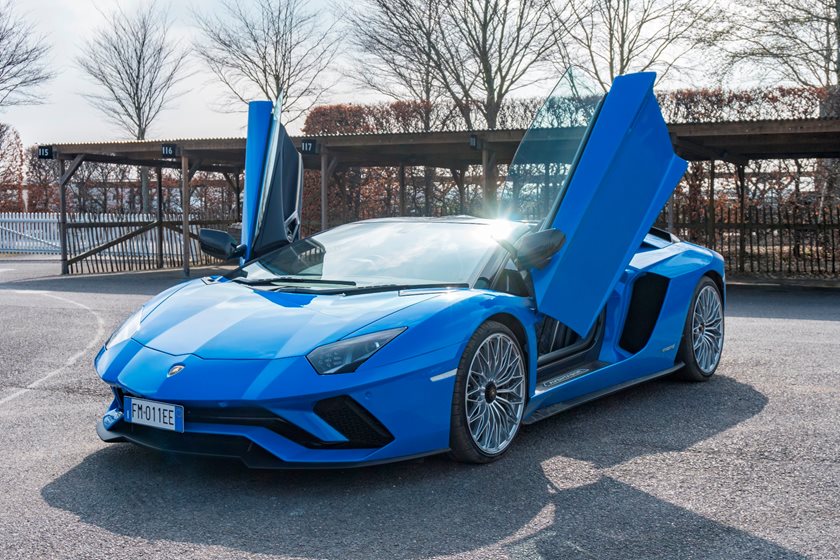
The Aventador is the latest in a long line of flagship Lamborghini V12. The engine may be an all-new design but it has stuck pretty close to the recipe that made the Countach such a success in the first place. It looks like a jet-fighter, doesn’t bother with turbochargers and you still can’t see out of it properly. It is a whole lot easier to drive though and blue flames come out of the exhaust too. This is the modern supercar for the nostalgic older connoisseur who just doesn’t have the leg strength to operate a Countach’s clutch anymore.

Chevrolet Corvette C4

American sports cars have long been dismissed as straight-line specialists, equipped with big engines that could smoke the rear tires at every traffic light but hamstrung by chassis that were better suited to wafting than cornering. The Corvette C4 was one of the first cars to challenge this stereotype. Early models were perhaps a bit underpowered with only 250 hp on offer but the introduction of more powerful engines and the superb ZR-1 in early 1990 made the updated C4 a formidable competitor. During the ‘80s however it was mostly those sharp looks and decent handling that made them popular.

Chevrolet Corvette C7

The latest Corvettes have moved the game on massively and the C7 is now a superbly balanced sports car with acceleration to match and oftentimes beat anything from Europe. The top supercharged ZR-1 makes 755 hp (compared to the C4 ZR-1's 375 hp) and can lap race tracks faster than much more expensive exotics. The old car may have the more elegant looks but even the most jaded ‘80s sportscar fan will have to admit that in this case, the modern Corvette is the one to have. Now if we were talking about a C1 or C2, then things may have turned out different…

BMW M1 vs i8 vs M8

BMW may have built a lot of sports cars in its time but actual supercars are rather thin on the ground. The mid-engined M1 has been the sole attempt so far, its 3.5-liter inline-6 and finely balanced chassis gave it the ability to frighten the established players in its day. The i8 is arguably the next step in the evolution of the supercar and its hybrid powerplant is superb but it does take some getting used to. The upcoming M8 is perhaps a more traditional take on the genre, until then, the ultra-rare and gorgeous M1 will do very nicely.

Mercedes 190E vs Mercedes-AMG C63

Mercedes made a few stabs at the supercar segment, the jointly designed SLR Mercedes-McLaren and its own SLS were pretty impressive. Back in the ‘80s though, the 190 E Cosworth was one of Mercedes’ sportiest small sedan offerings. The updated 2.5-liter models made 204-hp, which was plenty for its time, and have today become desirable modern-classics. A base 241-hp Mercedes C300 will easily outrun the old-timer these days though and the 503-hp C 63 S is quick enough to take on actual supercars. It is also superbly comfortable and safe but in terms of retro charm and rarity, the 190E has it beat. The choice is yours.

Lamborghini LM002 vs Urus

The Urus may have upset traditionalists when it was recently announced but not many people remember that Lamborghini has been here before, in the form of the LM002. In some ways, that crazy army-derived original with its Countach V12 and massive off-road tires seems more acceptable 30-years after it was introduced and perhaps we will look at the Urus in a similarly fond way in the years to come. For now, though, the thought of a sporty Lamborghini SUV still takes some getting used to, however fast it may be. The LM002 remains is still the winner here.

Who Wins?

In the rarefied world of high-value supercars, practical considerations like outright performance, daily usability and the latest safety and tech features are outweighed by more whimsical attributes like how it makes you feel. When viewed from that perspective, even those not swayed by nostalgia will concede that the prospect of heading out on an early Saturday morning drive in a rare Lamborghini Countach is that much more special than doing the same in a modern equivalent. So, the new batch of supercars may be miles better on paper, but it’s the old-school cars that provide the more memorable experience on the road.


View the original article here