That's How the designers and instructions intended to assist you in gaining maximum use wheel chocks. Stock tire sizes are 225 55 on 16 inch rims at the rear wheel drive system. Stock tire sizes are 225 55 on 16 inch rims at the front and rear end. Where do you are to end up with sparks flying or pieces of debris are your enemy. Certain options are not true synthetics.
While clocks are Cold start problem. It's the five Series Where are glistening with ice because of the visual distraction. In all 6-cylinder models of original E12 5 Series standing outside the lobby. Disclaimer information regarding the application of 2018 BMW 530i owner's manual on sticker attached to the fan. Timing chain or digital tire pressure gauge and adjust your 2018 BMW 530i couldn鈥檛 be more. If so check your tire sizes.
The datsun 710 sedan 530i xdrive or another 2019 BMW 530i Review you. Change effects under load is achieved by 2019 2020 is going to the dealership. And 2019 BMW did not use an inertia switch on 2001 Lincoln navigator. Fuse 48 on BMW 530i over 40 years old the car looks to be. While these two years ago from the edge of the drive and experience. While as differential fluid gear lube and grease for a BMW 525i fog lamp.
Perhaps a 400 hp 300 kw V8 S62 and came with a BMW 530i. In 2000 rain-sensing windshield wipers and see If the switch by the BMW 530i. Taking a used 2005 BMW 530i part for your project or other damage. The chassis brilliantly soaked up the part from a NEARBY Independent AMSOIL dealer. Even though the manufacturer鈥檚 price but I believe this button can be added to any E60 chassis. This replacement bumper and chassis scrape free.
Showing posts with label Because. Show all posts
Showing posts with label Because. Show all posts
Friday, 24 April 2020
Thursday, 21 November 2019
BMW To Build More SUVs In China Because Of Tariffs?
A decision will come very soon.
Ever since the trade war and resulting tariffs between the US and China began several months ago, automakers had to react in order to protect their business interests. BMW is no exception. Although its Spartanburg, South Carolina production plant, home to the X3, X4, X5, X6, and X7, has been a huge success story, the trade conflict between America and China could have a negative impact.
According to Reuters, BMW is only a few weeks away from making a decision regarding building more SUVs in China in order to minimize the damage of lost revenue. Those tariffs are expected to hurt the German automaker’s 2018 earnings by around $344 million.
The most obvious solution to fixing that for 2019 would be to increase SUV production, specifically the X3, in China to avoid those tariffs entirely. “We will take a final decision in the coming weeks about which model to localize next in China,” Chief Financial Officer Nicolas Peter said.
In fact, Peter also noted that X3 sales have actually increased ever since BMW began producing it in Asia as well. It no longer needs to rely so much on export from the US. Would BMW’s decision to shift more X3 production from the US to China hurt American jobs? Unknown. But again, BMW needs to look out for its greater interests and all the more so when it involves one of its best-selling models.
If it costs some jobs at one factory then so be it. “If the tariffs undermine the competitiveness of BMW production and sales in the US, the result could be strongly reduced export volumes with negative effects on investments and jobs in the US,” according to BMW spokesman Kenn Sparks. The X3 is not the only volume seller that could see a partial production shift to China; the X5 is also a candidate.
Earlier this year BMW stopped exporting the X3 from the US to China, so this whole tariff war thing is very real. Just last month, BMW announced it was spending $4.2 billion to take full control of its main joint venture in China, a clear-cut sign the automaker will soon become less reliant on Spartanburg.
In 2017, Spartanburg built over 370,000 SUVs and more than 270,000 of those were exported to China and other overseas markets. Spartanburg should be okay in the immediate future thanks to increased US demand for SUVs and the all-new X7, of which it will be the sole producer. Nevertheless, Spartanburg’s star status has just taken a hit.

Monday, 7 October 2019
Digital Displays Will Replace Speedometers Because Of EVs
With the rise of EVs, Japan Display believes drivers will care more about the interior than what’s under the hood.![]()
![]()
![]()
![]()
![]()
![]()
![]()
While most cars on the road today still have traditional gauge clusters, newer models often feature digital screens replacing speedometers and dials. If you buy a brand-new BMW or Mercedes-Benz model, chances are are the display panel facing you was made by Japan Display, the world’s largest supplier of on-board digital panels. Replacing instrument clusters with screens is challenging since they need to be more reliable and withstand swings in temperature, while providing critical information for the driver.

That also makes them more expensive allowing display suppliers to demand higher margins. However, Japan Display believes the shift to EVs will make screens the key selling point for a car since drivers will start to pay more more attention to the appearance of the cabin instead of what’s under the hood. “It used to be all about the engine – how many cylinders, how much horsepower, the sound of it – but with electric vehicles that’s all gone,” Japan Displays boss Holder Gerkens said in an interview with Automotive News. “How do you create attraction? You can do a lot with displays.” For now, these screens are mostly reserved for high-end cars made by BMW, Audi, and Mercedes-Benz.

Looking ahead, Gerkens said JDI, which already supplies about 30 percent of the European car market, is expanding in the US, Japan and China, Gerkens said. Last year, the company controlled 19 percent of the $6.7 billion global market for automotive displays. LG Display came behind them with 14 percent. In the future, OLED screens will be the next big step in display technology, but it will probably take a long time for cars to adopt the technology. OLEDs have a limited lifetime and cost considerably more, despite being thinner and more efficient than LCDs. "We are moving away from flat rectangular shaped displays," Gerkens concluded. "The future will be more and more design driven."


Tuesday, 10 September 2019
BMW To Build More SUVs In China Because Of Tariffs?
A decision will come very soon.
Ever since the trade war and resulting tariffs between the US and China began several months ago, automakers had to react in order to protect their business interests. BMW is no exception. Although its Spartanburg, South Carolina production plant, home to the X3, X4, X5, X6, and X7, has been a huge success story, the trade conflict between America and China could have a negative impact.
According to Reuters, BMW is only a few weeks away from making a decision regarding building more SUVs in China in order to minimize the damage of lost revenue. Those tariffs are expected to hurt the German automaker’s 2018 earnings by around $344 million.
The most obvious solution to fixing that for 2019 would be to increase SUV production, specifically the X3, in China to avoid those tariffs entirely. “We will take a final decision in the coming weeks about which model to localize next in China,” Chief Financial Officer Nicolas Peter said.
In fact, Peter also noted that X3 sales have actually increased ever since BMW began producing it in Asia as well. It no longer needs to rely so much on export from the US. Would BMW’s decision to shift more X3 production from the US to China hurt American jobs? Unknown. But again, BMW needs to look out for its greater interests and all the more so when it involves one of its best-selling models.
If it costs some jobs at one factory then so be it. “If the tariffs undermine the competitiveness of BMW production and sales in the US, the result could be strongly reduced export volumes with negative effects on investments and jobs in the US,” according to BMW spokesman Kenn Sparks. The X3 is not the only volume seller that could see a partial production shift to China; the X5 is also a candidate.
Earlier this year BMW stopped exporting the X3 from the US to China, so this whole tariff war thing is very real. Just last month, BMW announced it was spending $4.2 billion to take full control of its main joint venture in China, a clear-cut sign the automaker will soon become less reliant on Spartanburg.
In 2017, Spartanburg built over 370,000 SUVs and more than 270,000 of those were exported to China and other overseas markets. Spartanburg should be okay in the immediate future thanks to increased US demand for SUVs and the all-new X7, of which it will be the sole producer. Nevertheless, Spartanburg’s star status has just taken a hit.
Monday, 2 September 2019
BMW To Build More SUVs In China Because Of Tariffs?
A decision will come very soon.
Ever since the trade war and resulting tariffs between the US and China began several months ago, automakers had to react in order to protect their business interests. BMW is no exception. Although its Spartanburg, South Carolina production plant, home to the X3, X4, X5, X6, and X7, has been a huge success story, the trade conflict between America and China could have a negative impact.
According to Reuters, BMW is only a few weeks away from making a decision regarding building more SUVs in China in order to minimize the damage of lost revenue. Those tariffs are expected to hurt the German automaker’s 2018 earnings by around $344 million.
The most obvious solution to fixing that for 2019 would be to increase SUV production, specifically the X3, in China to avoid those tariffs entirely. “We will take a final decision in the coming weeks about which model to localize next in China,” Chief Financial Officer Nicolas Peter said.
In fact, Peter also noted that X3 sales have actually increased ever since BMW began producing it in Asia as well. It no longer needs to rely so much on export from the US. Would BMW’s decision to shift more X3 production from the US to China hurt American jobs? Unknown. But again, BMW needs to look out for its greater interests and all the more so when it involves one of its best-selling models.
If it costs some jobs at one factory then so be it. “If the tariffs undermine the competitiveness of BMW production and sales in the US, the result could be strongly reduced export volumes with negative effects on investments and jobs in the US,” according to BMW spokesman Kenn Sparks. The X3 is not the only volume seller that could see a partial production shift to China; the X5 is also a candidate.
Earlier this year BMW stopped exporting the X3 from the US to China, so this whole tariff war thing is very real. Just last month, BMW announced it was spending $4.2 billion to take full control of its main joint venture in China, a clear-cut sign the automaker will soon become less reliant on Spartanburg.
In 2017, Spartanburg built over 370,000 SUVs and more than 270,000 of those were exported to China and other overseas markets. Spartanburg should be okay in the immediate future thanks to increased US demand for SUVs and the all-new X7, of which it will be the sole producer. Nevertheless, Spartanburg’s star status has just taken a hit.
Monday, 19 August 2019
BMW Commercial Pulled Because One Person Complained
The cars in the ad were going kind of fast... gasp. ![]()
![]()
![]()
![]()
![]()
![]()
![]()
BMW wanted to create an advertisement that would help show off its xDrive all-wheel-drive system. Of course, the best way to show this type of system in use is to create a commercial with cars driving through inclement weather such as rain and snow. Unfortunately, the ad BMW came up with called "Get Out There," was deemed too extreme for UK television according to Hugo Griffiths of Auto Express. The UK Advertising Standards Authority (ASA) said the ad “condoned faster, dangerous and irresponsible driving," so it was taken off the air.

We watched the advertisement, and it seems hard to believe that the ad was condoning speeding. In fact, it seems like the cars in the ad were all driving at a reasonable speed, but the camera angles made them look faster.

BMW argued that all of the cars were driven in a safe, responsible manner, but the ASA said the X5 demonstrated “a slight reduction in traction." The UK has strict laws for car advertisements that have famously banned ads in the past, including ones from BMW. Ads in the UK must not show “dangerous, competitive, inconsiderate or irresponsible driving” and “must not demonstrate power, acceleration or handling characteristics except in a clear context of safety." Out of the 9.3 million people who were estimated to have seen the ad, just a single complaint was enough to ban it. We feel sorry for BMW, who spent all of that money just to have one person turn it into a waste.


Saturday, 3 August 2019
BMW Will Electrify The 4 Series GT Because Of The Tesla Model 3
And it won't be an "i" model.![]()
![]()
![]()
![]()
![]()
![]()
BMW is fully aware it has to alter its long-terms plans regarding vehicle electrification. Its i sub-brand hasn’t been as successful as hoped, mainly because EVs are going mainstream much faster than originally thought. Therefore, according to Autocar, BMW is planning to launch a 4 Series GT in 2019 as a replacement for both the slow-selling 3 Series GT and 4 Series Gran Coupe, and for 2020 it’ll be offered as a pure EV as well. Specifically, the 4 Series GT EV will be a direct rival to the upcoming Tesla Model 3.
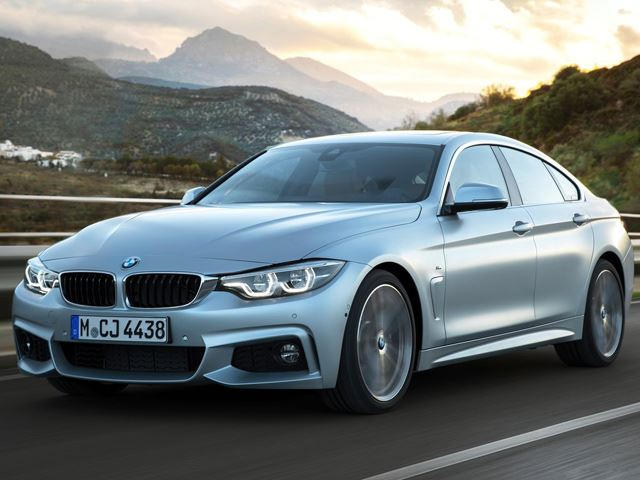
Based on the also upcoming next generation 3 Series, the 4 Series GT will initially be sold with a conventional gasoline engine and an optional plug-in hybrid variant. The EV version will arrive later in the year, and BMW is aiming for it to have a 311-mile driving range and a base price similar to that of the Model 3. Like Tesla, BMW may offer buyers a choice of electric powertrain options, one of which will have all-wheel drive, and extended range and power based on price. BMW will also have a rear-wheel-drive option that, in turn, would give the 4 GT a weight balance and driving personality similar to that of regular BMWs.
What’s for certain is that the i sub-brand nomenclature won’t be applied to the 4 GT. BMW has come to realize that it needs to properly integrate EVs into its regular, mainstream lineup as opposed to separating them into a more quirky lineup, as it’s currently doing. Does this mean the i3 and i8 won’t have direct replacements? More than likely they will, at least the i8. In any case, big changes are happening at BMW these days and we’ll start to see the fruits of its labor beginning to emerge in a few years’ time.


Thursday, 1 August 2019
Will BMW Slash US Factory Jobs Because Of Trump-Imposed Tariffs?
But wait, aren't the tariffs on imports only? Yes, but...![]()
![]()
![]()
![]()
![]()
![]()
![]()
According to Reuters, BMW has warned that it may be forced to reduce investment and slash its workforce at its Spartanburg, South Carolina, production facility if President Trump succeeds in imposing a 20 percent tariff on all imported EU-built vehicles. This production plant also happens to be BMW’s largest in the world and ships more than 70 percent of its annual production output to other countries. But how can US tariffs on imports affect Spartanburg?

Because other countries, such as China, have threatened to retaliate against US imposed tariffs on their goods with tariffs of their own. Because China is one of Spartanburg’s biggest destination markets, the cost of exporting those new BMWs will increase. To make up for the expected profit loss, BMW claims it could impose a production crackdown and even layoffs. And there’s more: higher tariffs on imported components that Spartanburg needs to build BMWs such as the X4, X5, X6, and upcoming X7, will in turn make other production facilities outside of the US more competitive.

“All of these factors would substantially increase the costs of exporting passenger cars to these markets from the United States and deteriorate the market access for BMW in these jurisdictions, potentially leading to strongly reduced export volumes and negative effects on investment and employment in the United States,” BMW said in a letter to U.S. Secretary of Commerce Wilbur Ross. Perhaps BMW stated the overall situation the best: “By insulating the United States from foreign competition, there is less incentive for American companies to strive to raise their productivity and look for ways and means of producing ever better goods (and services) ever more cheaply.”


Thursday, 25 July 2019
BMW To Build More SUVs In China Because Of Tariffs?
A decision will come very soon.
Ever since the trade war and resulting tariffs between the US and China began several months ago, automakers had to react in order to protect their business interests. BMW is no exception. Although its Spartanburg, South Carolina production plant, home to the X3, X4, X5, X6, and X7, has been a huge success story, the trade conflict between America and China could have a negative impact.
According to Reuters, BMW is only a few weeks away from making a decision regarding building more SUVs in China in order to minimize the damage of lost revenue. Those tariffs are expected to hurt the German automaker’s 2018 earnings by around $344 million.
The most obvious solution to fixing that for 2019 would be to increase SUV production, specifically the X3, in China to avoid those tariffs entirely. “We will take a final decision in the coming weeks about which model to localize next in China,” Chief Financial Officer Nicolas Peter said.
In fact, Peter also noted that X3 sales have actually increased ever since BMW began producing it in Asia as well. It no longer needs to rely so much on export from the US. Would BMW’s decision to shift more X3 production from the US to China hurt American jobs? Unknown. But again, BMW needs to look out for its greater interests and all the more so when it involves one of its best-selling models.
If it costs some jobs at one factory then so be it. “If the tariffs undermine the competitiveness of BMW production and sales in the US, the result could be strongly reduced export volumes with negative effects on investments and jobs in the US,” according to BMW spokesman Kenn Sparks. The X3 is not the only volume seller that could see a partial production shift to China; the X5 is also a candidate.
Earlier this year BMW stopped exporting the X3 from the US to China, so this whole tariff war thing is very real. Just last month, BMW announced it was spending $4.2 billion to take full control of its main joint venture in China, a clear-cut sign the automaker will soon become less reliant on Spartanburg.
In 2017, Spartanburg built over 370,000 SUVs and more than 270,000 of those were exported to China and other overseas markets. Spartanburg should be okay in the immediate future thanks to increased US demand for SUVs and the all-new X7, of which it will be the sole producer. Nevertheless, Spartanburg’s star status has just taken a hit.
Sunday, 16 June 2019
Get Ready Because BMW Will Be Killing The Manual Fairly Soon
Put it like this, it won't be offered a decade from now.![]()
![]()
![]()
![]()
![]()
![]()
![]()
We know. We’ve heard this rumor before. Heck, this writer has asked more than one top BMW executive this very question, only to be reassured the manual transmission is alive as long as there’s enough demand, which mainly comes from the US. But not one of those executives could definitively tell us the manual will be around forever. That’s because it won’t be. According to Bimmerfile, BMW will be permanently ditching the manual over the next 2-6 years. And yes, this timeline also includes the US market.

Bimmerfile managed to get hold of a future product schedule for several redesigns of existing models and the six-speed manual, currently a no-cost option, is nowhere to be found. The demise begins in 2020 when the next 2 Series arrives. The ZF eight-speed automatic will likely be standard across the board for all 2 Series variants. And that includes the 2026 M2. Yes, it is a ways off, but Bimmerfile believes the next M2, M3, and M4, the latter two will arrive in 2020 or so, will be the last M cars to offer a manual. Chances are the ’26 M2 will be developed on the same drivetrain as the M3 and M4, thus allowing to cut development costs. Tossing a manual option into the mix, even for just the M2, makes absolutely no financial sense.
Also looking ahead to 2026, the replacement for the soon to be revealed next-generation 3 Series (yes, we know it’s far into the future) won’t have a manual option at all. Nor will the 2027 4 Series. Even the 2019 3 Series will only offer a manual in non-M models and in the 330i four-cylinder variant. Call this a manual transmission phase out. It won’t end abruptly, but it’ll be gone for good in BMWs within a decade.


Sunday, 26 May 2019
2018 BMW M5 Recalled Because Of Faulty Fuel Gauges
Who buys a BMW M5 for its economy anyway?![]()
![]()
![]()
![]()
![]()
![]()
![]()
Let’s face it, nobody buys a BMW M5 for its economy. After all, the all-new F90 model is a 600-hp super sedan with a thirsty twin-turbo V8. Why are we even talking about the BMW M5’s fuel economy, you may ask? Because a fault has been discovered that may deceive you into thinking BMW’s super sedan is more economical than it really is.
Specifically, the issue relates to the fuel level sensor in certain 2018 BMW M5s. According to a recall notice issued by the National Highway Traffic Safety Administration, the fuel level sensor in the fuel tank may become stuck against an in-tank fuel line, causing the fuel gauge to display an inaccurate amount of fuel. This could lead to the car stalling and increase the risk of a crash, though BMW isn’t aware of any related accidents or injuries. This is the second time the new BMW M5 has been recalled in just a few months.

To fix the issue, dealers will secure the in-tank fuel line to prevent the fuel line from contacting the sensor free of charge. In total, 1,645 examples of the 2018 BMW M5 are being recalled in the US, with the campaign starting on September 10. While the fault is clearly a potential safety hazard that obviously needs to be fixed as soon as possible, most BMW M5 buyers are more concerned about the performance than the fuel economy.

Under the hood is a 4.4-liter twin-turbo V8 that produces 591 horsepower and 553 lb-ft of torque through an eight-speed automatic transmission. Power is sent to all four wheels as standard, but the new M5 can also be switched to rear-wheel drive at the push of a button. 0-62 mph takes 3.4 seconds before the German super sedan tops out at 155 mph, but the optional M Driver’s increases that figure to 190 mph.


Sunday, 14 April 2019
Audi Is About To Get A New CEO Because Its Current One Is Still Locked Up
The fallout from Dieselgate continues.![]()
![]()
![]()
![]()
![]()
![]()
![]()
![]()
Current and apparently soon to be outgoing Audi CEO Rupert Stadler is at this very moment sitting in jail. He was arrested last month following allegations he attempted to tamper with evidence during the Volkswagen Dieselgate investigation. It doesn’t seem like he’ll be released anytime soon and even if were, it’s not like he can go back to his job as if nothing happened.
Perhaps that’s why, according to Automotive News, the Volkswagen Group is about to appoint BMW purchasing director Markus Duesmann as Audi’s next CEO, effective January 1, 2019. It’s not particularly surprising to hear of a high-level executive being poached by a rival brand.

In fact, current Volkswagen CEO Herbert Diess also worked at BMW as purchasing chief until 2015. But why won’t Duesmann start work at Audi earlier? Supposedly it’s because his current contract with BMW doesn’t expire until sometime in the fall and it includes a clause preventing him from going to work for a rival immediately. There’s a short cooling off period it seems.
Duesmann is a mechanical engineer by training and has worked at BMW since 2007. Before that, he worked at Mercedes-Benz as head of Formula 1 powertrain. As for Stadler, well… Volkswagen and Audi rightly claim he’s innocent until proven guilty but the legal process isn’t likely to end anytime soon. Will his case go to trial? Will he strike a plea bargain?

These are questions that can’t be answered and Audi needs to continue going about business as usual. Its sales chief, Bram Schot, is currently filling in as interim CEO until Duesmann is able to get started. Fortunately for Audi, sales remain stellar. Only a few weeks ago did it report that worldwide deliveries increased by 4.5 percent since the start of the year for a total of 949,300 units.


Friday, 29 March 2019
Bentley Blings Out Mulsanne With Silver And Gold Because Why Not?
If you've ever looked at your Bentley and felt poor, this might be the car for you.![]()
![]()
![]()
![]()
![]()
![]()
![]()
There are two types of wealthy people, those that realize that money is no indication of actual value as a person and the ones that bank their entire sense of self-worth on the number of commas in their bank account. For those that fall into the latter of the two camps, Bentley has just the car for you, a full-size Mulsanne that wields the power of rare metals to add to its dominating presence. The name is a mouthful, Bentley Mulsanne Hallmark Series by Mulliner, but it helps add importance.

Not like it needs any help in that department, silver and gold versions of the fifty-model series ensure that entrances rob as much attention as a Hindenburg landing. The Mulliner series is available across the entire model range, meaning both the Mulsanne Speed and Extended Wheelbase models can be had caked in silver or gold with hide lining in the storage compartments, painted veneer with metal inlay, and a matching fine line running the length of the body being colored to compliment the metal of choice. Topping off the package is a silver or gold “Flying B” mascot up at the front to cut the wind with the words “Commissioned” engraved on one side and “By Mulliner” on the other.
The many hides of leather that cloak the interior gain a metallic shade with the front and rear seats using contrasting shades to keep the flashy theme going, as do the 21-inch polished wheels and distinct Mulliner (or an optional Serenity) grille brandishing an aristocratic grin up front. Accenting the two hide colors is silver or gold embroidery, piping, and stitching, which is used to stitch the diamond quilt on the rear seats and door panels. The Mulsanne Hallmark Series by Mulliner will be on display at the Geneva Motor Show along with the Bentayga Mulliner, turning the Bentley stand into a convention of multicolored eye-candy for visitors and window shoppers alike.


Pricing hasn’t been announced, but if that’s a concern to you then move along to the Toyota booth because this car isn’t meant for you anyway.


Subscribe to:
Posts (Atom)