Showing posts with label coolest. Show all posts

Sunday, 13 October 2019

The Coolest Hood Ornaments Ever Made

From an era when style trumped pedestrian safety.

Hood ornaments used to be all the rage, replacing hood-mounted thermometers of the late 1890s. Manufacturers offered a range of them on all their different models; designed in-house or often by big-name artists and sculptors of the era. There were, of course, numerous aftermarket hood ornaments too, an easy form of personalization still common amongst hotrodders today.

But, with changing times and increasing safety regulations, the age of the hood ornament is just about dead and gone – these sculptures removed for aerodynamic efficiency to increase fuel economy, and in many cases, due to the danger they posed when striking a pedestrian. So in memory of the era of hood ornaments, we take a look at our favorites over the years, including a few still in production.
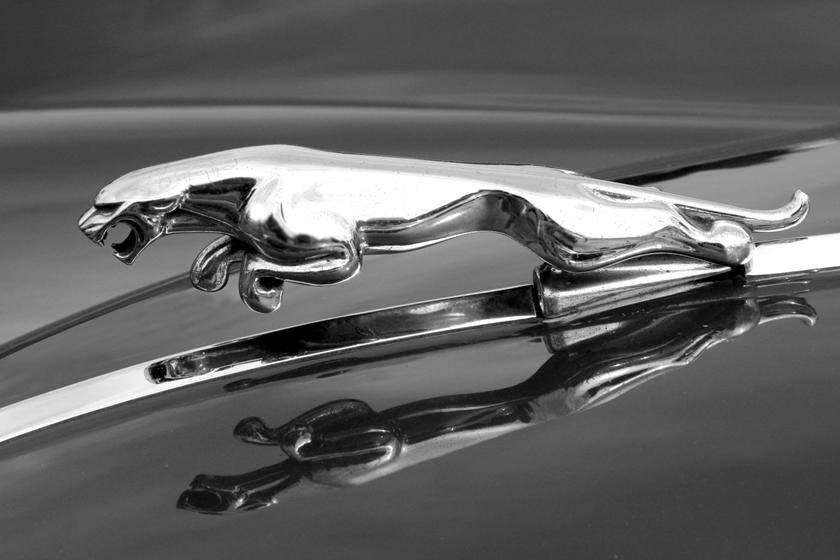
Jaguar Leaper

The Leaper now adorns the trunk lids of every Jaguar model, a sign of its fall from grace as one of the world’s most iconic and long-standing hood ornaments. It used to adorn the hood of every Jag model, gracefully leaping forward, signifying the power and elegance of the vehicle off which it proudly leaped. The beginning of the end for the Leaper began when European Jaguars arrived only wearing the Growler badge, though American and Middle Eastern models still featured the cat. Since 2005, not a single Jag features the Leaper, though we figure it could look pretty classy if it adorned the hood of an F-Type.

Mercedes-Benz 3-Point Star

The famous Mercedes logo oozes class and style, a sign of the rich heritage of the German brand that spans decades of successes on the road and the racetrack. The three-pointed star is actually one of the only hood ornaments on this list still in production, making it unique as a stalwart of an ancient era. Adorning the C-Class facelift and S-Class nowadays, you’ll find the 3-pointed star encircled in silver, which one might think of as not being very safe in the event of a pedestrian collision. To circumvent this danger, the 3-pointed star is mounted on a spring-loaded ball joint that can flex out of the way, and break if need be to reduce pedestrian damage.

1955 Chevrolet Bel Air

The 1950s were glory days for aviation, with the space race hotting up and aviation technology moving forward in leaps and bounds. Chevrolet gave a classy nod to aviation excellence by equipping the Chevy Bel Air with an aviation-inspired hood ornament in the form of a jet.

The jet was inspired by the popular art deco styling of the era, with a hawk-head as its nose and a trailing tail down the center of the hood. The ‘hood bird’ didn’t last long beyond the decade but goes down as one of the classiest designs to have adorned the hood of one of America’s great classics.

1929 Duesenberg Model J

The 1920s were the peak of the art deco design era, with everything from fashion to architecture inspired by the design style. The Duesenberg Model J epitomized this when it debuted in 1928, featuring this classy two-dimensional art deco bird in flight, mounted atop the radiator cap. Particularly stylish, this one could also be rather deadly we’d imagine, so it’s no real surprise this wouldn’t fly in today’s day and age.

Mack Bulldog

Mack is a truck and former bus manufacturer established at the beginning of the 20th century. But it wasn’t until World War I when the company’s trucks became known as ‘the bulldog’. Their blunt-nosed hood, durability, and tenacious performance reminded English soldiers of their own national mascot, the English bulldog, and the name stuck.

Since 1922, Mack’s logo has been the English bulldog, adorning all models as an identifiable and stylish hood ornament since 1938. The ornament has significance too, based on its coloring. A gold-plated bulldog means that the truck and all its drivetrain components are produced in-house by Mack, but if the bulldog is chrome plated, it means components are borrowed from other manufacturers.

Packard Donut Chaser

American car company, Packard, decorated the hoods of its high-end vehicles with one of two hood ornaments during the era from 1926 to 1950, either a cormorant bird or the Goddess of Speed. It was the latter that was most famous, known by many as the Packard Donut Chaser. Though there were several iterations throughout its lifespan, they all featured a common art deco design language of a winged woman kneeling on her right knee, her left leg outstretched behind her, her arms extended forward holding a wheel and tire (the donut). Her long hair and loose clothes flowed behind her, evoking the sense of speed. One of the classiest iterations of the Donut Chaser featured a glass wing, though numerous were metal in construction.

Rolls-Royce Spirit of Ecstasy

Arguably the most iconic hood ornament of all time, the Spirit of Ecstasy adorns the noses of almost all Rolls-Royce motorcars made since 1911, with a few special exceptions. Designed by Charles Sykes, and based upon his original sculpture called ‘The Whisper’, the Spirit of Ecstasy was modeled after English actress, Eleanor Thornton, with whom Sykes had had a secret love affair.

The sculpture of the lady bending forward is often thought to have wings, but the wings are in fact billowing cloth from her outstretched arms. Sykes described the Spirit as, "A graceful little goddess, the Spirit of Ecstasy, who has selected road travel as her supreme delight and alighted on the prow of a Rolls-Royce motor car to revel in the freshness of the air and the musical sound of her fluttering draperies."

The modern Spirit of Ecstasy can be retracted into the hood of a Rolls and is made from either stainless steel, 24-carat gold plated steel or illuminated, frosted crystal.

Bentley 'Flying B'

As chief rival to Rolls-Royce, it seems fitting that Bentley would have its own elaborate hood ornament. Dubbed the ‘Flying B’, it doesn’t take too much imagination to understand why. The iconic capital letter ‘B’ stands proudly with a pair of wings extended behind it and has done so on numerous, though not all, Bentleys throughout the years. With the issues of theft and safety at hand – there was even a recall for Bentley models from 2007 to 2009 for ‘faulty hood ornaments’ that were potentially dangerous – the flying B has fallen out of favor in recent years, though tuning houses like Arden will still fashion them for you with a legal safety-approved mechanism too, and the Mulsanne still offers it as standard.

Pontiac Chief Of The Sixes

For the first and second generation Pontiac Chieftain, from 1949 to 1957, as well as the post-WW2 Streamliner, the hood ornament was a standout design feature, featuring an Indian chief’s head – after all, Pontiac was chief of the Ottawa Indian tribe. There were various interpretations of the chieftain ornament, but one of the most iconic was the amber orange one that would light up at night, giving the Pontiac a glowing figure on its bow as it charged through the night. Nowadays, only the frosted Spirit of Ecstasy represents anything close.

Nash Metropolitan 'Flying Lady'

The 1957 Nash Metropolitan went against the ‘bigger is better’ philosophy of most manufacturers of the era, and was compact by almost any definition. But it’s the 1955-58 Series III Metropolitan we feature here for its ‘Flying Lady’ hood ornament. The ornament was a nude woman lying face down whilst propping herself up on her crossed arms upon a winged platform of sorts. It was a particularly classy hood ornament, and the wings could even be removed for a more streamlined, more risqué ornament design. The Flying Lady is part of a bygone era, the likes of which we’ll never see again.

Friday, 6 September 2019

The Coolest Doors On Everyday Cars

You don't need a supercar to have cool doors.

There’s far more to a supercar than something as superficial as a cool pair of doors. But, when an engaging chassis meets a sonorous engine and handsome styling, a good set of doors adds the final touch to a mega supercar – giving it the wow factor it should have.

However, you don’t have to spend millions to get a cool set of doors on your daily ride, giving you that daily wow factor or futuristic spaceship styling. We’ve chosen the coolest doors around for you – though some of the cars they come attached too aren’t always the coolest.

Gullwing Doors

Gullwing doors are iconic, made famous by the Mercedes-Benz 300SL initially, but later on in pop culture by the DeLorean DMC 12 from the Back to the Future movie franchise. Along the way, there have been other cool cars with gullwing doors, such as the Autozam AZ-1 kei car and the Melkus RS1000. In recent years, the SLS AMG and Pagani Huayra have been the most famous gullwing adorned vehicles.

But if you’re looking for gullwings in the modern era on a non-supercar you’ll find them on an unlikely candidate. The Tesla Model X might advertise them as ‘Falcon doors’, but they’re just a variation of traditional gullwings. The front doors open in a traditional front-hinged manner, but the rear doors open upwards giving the family electric crossover an imposing stance. The Falcon doors are useful in tight spaces, opening upwards and away from potentially scratching other vehicles.

Butterfly Doors

Did you know that the butterfly door design on the McLaren F1 was inspired by the doors of the Japanese Toyota Sera?– That’s what Gordon Murray, the F1’s designer, said in any case. The door style now adorns sports cars and supercars like the BMW i8, LaFerrari, McLaren 720S, and Mercedes-AMG Project One.

However, one German manufacturer has given a modern road car the butterfly effect. The Volkswagen XL1 was a compact 2-person plug-in hybrid diesel car, designed and produced in limited numbers to be ultra-efficient. The XL1 achieved a US mpg rating of 260 mpg, thanks to a two-cylinder turbo-diesel engine paired with a 5.5kWh battery pack and electric motor. The teardrop design was ultra-aerodynamic, with a drag coefficient of just 0.186, and combined with a curb weight of just 1,753 lbs, the XL1 was capable of gliding along effortlessly. The performance was decent too, with a governed top speed of 98.2mph and a 0-60 mph sprint time of 11.9 seconds. A total of 250 VW XL1s were made in its limited production run, with one recently popping up for sale if you're interested.

Scissor Doors

They’re most commonly known as Lamborghini Doors, after being made famous by the brand’s repeated usage of the door style, but their real name is scissor doors. Very few road-going cars exist with scissor doors, and those that do are almost exclusively high-end supercars. Those that aren’t are usually concepts; however two road-going commuter cars exist with scissor doors. The Renault Twizy is one, though doors are an optional extra. But the Tata Pixel features them as standard, amongst many other innovations.

The Indian manufacturer has built the Pixel for city mobility within Europe, giving the pod-like city car a range of tech to make it the perfect city car. Powered by a 66-horsepower 3-cylinder turbo-diesel engine, fuel economy is rated at 69 mpg. But it’s the turning abilities that set the scissor-doored city car aside, with wheels that can turn 105 degrees for an 8.5-foot turning circle, which engineers call ‘zero turn’ drive; clever thinking from the company that owns Jaguar Land Rover.

Canopy Doors

‘Canopy doors’ is a broad spectrum term applied to a range of door types that don’t have a single fixed name or manner of operation. Generally, the cockpit opens as a whole, with either the entire front or top of the vehicle lifting to allow ingress. Canopy doors can be hinged either at the front, back, or sides, and have been used on numerous concept cars throughout the years, such as the Lamborghini Egoista. But while many canopy doors open upwards like fighter jets, the BMW Isetta is the most common front-canopy door around. The door style was popular on other bubble cars of the era, but the Isetta was the most famous, and arguably most influential as it’s the vehicle that saved BMW’s bacon.

Suicide Doors

Called coach doors by Rolls-Royce, suicide doors are doors that open up in a traditional manner but hinged at the rear rather than the front. They derived their name from the fact that if they were opened whilst driving, the door would be flung wide open by the wind, leaving the occupant capable of freely falling from the vehicle, likely to their death. Grim, right, this is why perhaps modern manufacturers don’t like the terminology. Many have produced vehicles with suicide doors though, with a notable icon being the Mazda RX-8.

However, the most recent example has been the BMW i3, the compact electric city car built with extensive use of carbon fiber and recycled materials. It features a flat floor inside to make the most of its space, and the suicide doors help make the most of a small footprint, by making the door aperture wider for rear occupants. However, as the rear doors effectively form the B-pillar of the i3, rear passengers can’t really climb in and out without the driver having to take their seatbelt off and open their door. Impractical, but what’s a little innovation without its kinks?

Sliding Doors

Sliding doors are usually the reserve of minivans and mini-buses, made for easy access and the reduced risk of bumping into other cars in parking lots. But variations of the sliding door principle have been used elsewhere, the coolest of which was the BMW Z1 sports car of the 1990s. The Z1 made use of unhinged doors that slid down into the door-sill seemingly disappearing entirely. It’s arguably the most memorable feature of the Z1, and one we still wish would be emulated to this day, as it’s possibly one of the coolest door styles on this list.

Wednesday, 1 May 2019

The Coolest Doors On Everyday Cars

You don't need a supercar to have cool doors.

There’s far more to a supercar than something as superficial as a cool pair of doors. But, when an engaging chassis meets a sonorous engine and handsome styling, a good set of doors adds the final touch to a mega supercar – giving it the wow factor it should have.

However, you don’t have to spend millions to get a cool set of doors on your daily ride, giving you that daily wow factor or futuristic spaceship styling. We’ve chosen the coolest doors around for you – though some of the cars they come attached too aren’t always the coolest.

Gullwing Doors

Gullwing doors are iconic, made famous by the Mercedes-Benz 300SL initially, but later on in pop culture by the DeLorean DMC 12 from the Back to the Future movie franchise. Along the way, there have been other cool cars with gullwing doors, such as the Autozam AZ-1 kei car and the Melkus RS1000. In recent years, the SLS AMG and Pagani Huayra have been the most famous gullwing adorned vehicles.

But if you’re looking for gullwings in the modern era on a non-supercar you’ll find them on an unlikely candidate. The Tesla Model X might advertise them as ‘Falcon doors’, but they’re just a variation of traditional gullwings. The front doors open in a traditional front-hinged manner, but the rear doors open upwards giving the family electric crossover an imposing stance. The Falcon doors are useful in tight spaces, opening upwards and away from potentially scratching other vehicles.

Butterfly Doors

Did you know that the butterfly door design on the McLaren F1 was inspired by the doors of the Japanese Toyota Sera?– That’s what Gordon Murray, the F1’s designer, said in any case. The door style now adorns sports cars and supercars like the BMW i8, LaFerrari, McLaren 720S, and Mercedes-AMG Project One.

However, one German manufacturer has given a modern road car the butterfly effect. The Volkswagen XL1 was a compact 2-person plug-in hybrid diesel car, designed and produced in limited numbers to be ultra-efficient. The XL1 achieved a US mpg rating of 260 mpg, thanks to a two-cylinder turbo-diesel engine paired with a 5.5kWh battery pack and electric motor. The teardrop design was ultra-aerodynamic, with a drag coefficient of just 0.186, and combined with a curb weight of just 1,753 lbs, the XL1 was capable of gliding along effortlessly. The performance was decent too, with a governed top speed of 98.2mph and a 0-60 mph sprint time of 11.9 seconds. A total of 250 VW XL1s were made in its limited production run, with one recently popping up for sale if you're interested.

Scissor Doors

They’re most commonly known as Lamborghini Doors, after being made famous by the brand’s repeated usage of the door style, but their real name is scissor doors. Very few road-going cars exist with scissor doors, and those that do are almost exclusively high-end supercars. Those that aren’t are usually concepts; however two road-going commuter cars exist with scissor doors. The Renault Twizy is one, though doors are an optional extra. But the Tata Pixel features them as standard, amongst many other innovations.

The Indian manufacturer has built the Pixel for city mobility within Europe, giving the pod-like city car a range of tech to make it the perfect city car. Powered by a 66-horsepower 3-cylinder turbo-diesel engine, fuel economy is rated at 69 mpg. But it’s the turning abilities that set the scissor-doored city car aside, with wheels that can turn 105 degrees for an 8.5-foot turning circle, which engineers call ‘zero turn’ drive; clever thinking from the company that owns Jaguar Land Rover.

Canopy Doors

‘Canopy doors’ is a broad spectrum term applied to a range of door types that don’t have a single fixed name or manner of operation. Generally, the cockpit opens as a whole, with either the entire front or top of the vehicle lifting to allow ingress. Canopy doors can be hinged either at the front, back, or sides, and have been used on numerous concept cars throughout the years, such as the Lamborghini Egoista. But while many canopy doors open upwards like fighter jets, the BMW Isetta is the most common front-canopy door around. The door style was popular on other bubble cars of the era, but the Isetta was the most famous, and arguably most influential as it’s the vehicle that saved BMW’s bacon.

Suicide Doors

Called coach doors by Rolls-Royce, suicide doors are doors that open up in a traditional manner but hinged at the rear rather than the front. They derived their name from the fact that if they were opened whilst driving, the door would be flung wide open by the wind, leaving the occupant capable of freely falling from the vehicle, likely to their death. Grim, right, this is why perhaps modern manufacturers don’t like the terminology. Many have produced vehicles with suicide doors though, with a notable icon being the Mazda RX-8.

However, the most recent example has been the BMW i3, the compact electric city car built with extensive use of carbon fiber and recycled materials. It features a flat floor inside to make the most of its space, and the suicide doors help make the most of a small footprint, by making the door aperture wider for rear occupants. However, as the rear doors effectively form the B-pillar of the i3, rear passengers can’t really climb in and out without the driver having to take their seatbelt off and open their door. Impractical, but what’s a little innovation without its kinks?

Sliding Doors

Sliding doors are usually the reserve of minivans and mini-buses, made for easy access and the reduced risk of bumping into other cars in parking lots. But variations of the sliding door principle have been used elsewhere, the coolest of which was the BMW Z1 sports car of the 1990s. The Z1 made use of unhinged doors that slid down into the door-sill seemingly disappearing entirely. It’s arguably the most memorable feature of the Z1, and one we still wish would be emulated to this day, as it’s possibly one of the coolest door styles on this list.

Wednesday, 17 April 2019

Germany Has The Coolest Cop Cars In The World

Meanwhile, America's finest drive modified Ford Explorers.

Go to Germany and more than likely the most popular police cars you’ll spot are Volkswagen Passat wagons and the like. Nothing special, right? Of course not. However, spend a bit more time in the bier and wurst-loving country and it’s possible you could see some pretty amazing police cars, many of which we’ve gathered here for your viewing pleasure. Most American police departments purchase Ford Interceptor SUVs, modified Dodge Chargers and Chevrolet Caprices. They’re cool and all but not nearly as cool as, say, a Corvette Stingray with rollers bolted to its roof.

Obviously, all of the German cop cars you’re about to see are unique are not the standard, but they exist (or used to), nonetheless, and many are still on active duty today. So beware, German tourists. If you rent a car be sure to abide by all traffic laws. Otherwise, well, tickets are no fun in any country.

BMW Isetta

Let’s start with German police car from yesteryear. Although the BMW Isetta may not look like much, it certainly has character. With its single “refrigerator” front door, the Isetta would definitely not be our first choice by police duty. However, Germany post-World War II needed to be completely rebuilt and police departments didn’t have a lot of money at the time. Therefore, a vehicle that was simple, reliable and economical was needed and the domestic-built Isetta hit all of those requirements. The Isetta was actually used for police duty in the early 1960s by various departmental regions, such as in Lower Saxony. Modifications were minimal, like dark green paint, radio, and a single blue flashing light. Nothing special, right? Well, a restored Isetta cop car was sold at a 2013 auction for over $86,000.

Porsche 356B Cabrio

On November 23, 1960, a Porsche 356B Cabrio entered service in the Dusseldorf police department. It was not meant to be the start of a fleet of 356s, but rather had a more specific purpose: to patrol the Autobahn. If Autobahn drivers had no speed limits but still did something illegal, then the police would need a vehicle capable of keeping up with them. The BMW Isetta would be the absolute worst choice, hence the 356B’s call to service. This one patrolled the Autobahn for six years before being retired – with nearly 100,000 miles on its odometer. This 356B Cabrio was modified with a larger gas tank, a single flashing light, loudspeaker, an additional brake light, and even water repellent upholstery. Today, this Porsche still exists and is part of a private collection in Belgium. Fun fact: the Dusseldorf police department was the 356th division.

Mercedes-Benz S-Class

Now for something a bit more conventional. Back in 1990, Mercedes-Benz built five modified S-Class sedans specifically for the use of transporting large sums of money. The cars were originally registered with the Federal Police, but the Bundesbank used them the most (for obvious reasons). Although this may appear to be nothing more than a tweaked W126 powered by a 4.2-liter V8, it also carried onboard machine guns, fire extinguishing system, and many other safety features. As you can imagine, one of these Mercs didn’t come cheap, costing taxpayers at the time 650,000 Deutsche Marks, or roughly 1.2 million euros when the German mark to euros was set back in 1999. A couple of years ago, however, one of the surviving S-Class sedans was sold on eBay for just 10,000 euros.

BMW M3

The E36 BMW M3 is still held in high regard 26 years after it originally debuted. It’s really no surprise at least one German police department bought one for intended service. With a total of 321 hp, this E36 M3 was a real nightmare for those who (wrongly) assumed they could outrun cop cars. The E36 M3 was capable of accelerating from 0-62 mph in 5.5 seconds and had a top speed of 155 mph. However, it was entirely possible performance was affected to some degree because of that massive addition to the roof. The lights and loudspeaker system is not exactly a good example of aerodynamics.

Volkswagen e-Golf

Sooner or later an all-electric vehicle would appear as a police car. And here it is: this Volkswagen e-Golf. Hey, probably better than C02 polluting diesel, right? This particular e-Golf was presented to the police back in September 2014. Not only is it zero emissions, but it’s also nearly silent. Speeders will never hear it coming. Then again, chances are this e-Golf didn’t have the performance capabilities to chase down lots of cars. Because it has an outdated all-electric powertrain at this time, it only managed a maximum driving range of 118 miles before requiring a recharge. Imagine you’re a German police officer out on patrol and you’re about to give someone a ticket for whatever reason but you can’t because, embarrassingly, your car has run out of juice.

TechArt Porsche 911 Carrera S

Okay, now we’re talking! Of course a Porsche 911 would show up here sooner or later, and this one just so happens to have been tuned by TechArt. This 911 Carrera S now has a total output of 370 hp and a 0-62 mph time of 4.5 seconds. Top speed? A respectable 186 mph. But wait, aren’t these specs only so-so? They are today, but back in 2005 when this tuned 911 entered service they were pretty badass. Interestingly, the German Ministry of Transportation was the one behind this tuned 911. Teaming up with the Association of German Tuners, it was part of a program to encourage drivers to use only quality components for tuning. Welcome to Germany.

Brabus Mercedes-Benz CLS V12

It was called the Brabus Rocket for a very good reason: 730 hp. This Brabus-tuned Mercedes-Benz CLS is not only your typical police cruiser but also not a normal road car. And, once again, it was built specifically to promote tuning safety. There’s an irony to that. The Brabus Rocket CLS V12 S is powered by a bi-turbo V12 and can reach a supposed top speed of 225 mph. It was built from the get-go for Autobahn duty. Go figure. To this day, this CLS Brabus Rocket remains one of the fastest sedans on public German roads. Picture, for a moment, this thing chasing down banking robbers on the Autobahn. Anyone willing to wager a bet as to who’s fastest? Didn’t think so.

ABT Audi R8 GTR

An Audi R8 modified for police service? Are the German police recruiting these days? We’d be so down for this one. Back in 2011, German tuning firm ABT was commissioned to modify a 5.2-liter V10-powered R8, and the result was this, the R8 GTR. With a new output of 620 hp, police officers could reach 62 mph in only 3.2 seconds and 124 mph in 9.9 seconds. Top speed? How does 202 mph sound to you? So why was ABT paid to build this supercar police car? Once again, it was part of the joint program between the Transportation Ministry and Association of German Tuners. Promoting responsible tuning has never been so much fun.

Mini Cooper JCW

To be clear, like many of the other selections on this list, this Mini Cooper JCW is a show car only. Nothing has changed under its hood, as the turbocharged 2.0-liter four-cylinder with 231 hp remains stock. However, this hot hatch did receive all of the necessary police equipment, including roof-mounted flashing lights and even lights slotted into the hood. A police-approved radio system was also installed. A unique police livery was also applied, complete with paint smudges. The idea was to make this look like the work of street artists because Mini is a youth-oriented brand. No joke. But imagine street artists practicing their art on real police cars. That’s called jail time.

Chevrolet Corvette Stingray

Did we save the best for last? If you’re a Chevrolet Corvette fan then yes. This C7 Corvette Stingray was shipped to Germany specifically for – you guessed it – that government-tuners association program. Its 6.2-liter V8 with 466 hp was left stock, but the coupe’s body received unique police livery, a body kit, flashing lights, loudspeaker, and a telephone with a protected line. But you know when you’re in Germany when the government officials placing the order for the Corvette opted for the seven-speed manual transmission instead of the optional eight-speed slushbox. Did we mention Germany is awesome? If not, we just did.

Monday, 18 March 2019

The Coolest Doors On Everyday Cars

You don't need a supercar to have cool doors.

There’s far more to a supercar than something as superficial as a cool pair of doors. But, when an engaging chassis meets a sonorous engine and handsome styling, a good set of doors adds the final touch to a mega supercar – giving it the wow factor it should have.

However, you don’t have to spend millions to get a cool set of doors on your daily ride, giving you that daily wow factor or futuristic spaceship styling. We’ve chosen the coolest doors around for you – though some of the cars they come attached too aren’t always the coolest.

Gullwing Doors

Gullwing doors are iconic, made famous by the Mercedes-Benz 300SL initially, but later on in pop culture by the DeLorean DMC 12 from the Back to the Future movie franchise. Along the way, there have been other cool cars with gullwing doors, such as the Autozam AZ-1 kei car and the Melkus RS1000. In recent years, the SLS AMG and Pagani Huayra have been the most famous gullwing adorned vehicles.

But if you’re looking for gullwings in the modern era on a non-supercar you’ll find them on an unlikely candidate. The Tesla Model X might advertise them as ‘Falcon doors’, but they’re just a variation of traditional gullwings. The front doors open in a traditional front-hinged manner, but the rear doors open upwards giving the family electric crossover an imposing stance. The Falcon doors are useful in tight spaces, opening upwards and away from potentially scratching other vehicles.

Butterfly Doors

Did you know that the butterfly door design on the McLaren F1 was inspired by the doors of the Japanese Toyota Sera?– That’s what Gordon Murray, the F1’s designer, said in any case. The door style now adorns sports cars and supercars like the BMW i8, LaFerrari, McLaren 720S, and Mercedes-AMG Project One.

However, one German manufacturer has given a modern road car the butterfly effect. The Volkswagen XL1 was a compact 2-person plug-in hybrid diesel car, designed and produced in limited numbers to be ultra-efficient. The XL1 achieved a US mpg rating of 260 mpg, thanks to a two-cylinder turbo-diesel engine paired with a 5.5kWh battery pack and electric motor. The teardrop design was ultra-aerodynamic, with a drag coefficient of just 0.186, and combined with a curb weight of just 1,753 lbs, the XL1 was capable of gliding along effortlessly. The performance was decent too, with a governed top speed of 98.2mph and a 0-60 mph sprint time of 11.9 seconds. A total of 250 VW XL1s were made in its limited production run, with one recently popping up for sale if you're interested.

Scissor Doors

They’re most commonly known as Lamborghini Doors, after being made famous by the brand’s repeated usage of the door style, but their real name is scissor doors. Very few road-going cars exist with scissor doors, and those that do are almost exclusively high-end supercars. Those that aren’t are usually concepts; however two road-going commuter cars exist with scissor doors. The Renault Twizy is one, though doors are an optional extra. But the Tata Pixel features them as standard, amongst many other innovations.

The Indian manufacturer has built the Pixel for city mobility within Europe, giving the pod-like city car a range of tech to make it the perfect city car. Powered by a 66-horsepower 3-cylinder turbo-diesel engine, fuel economy is rated at 69 mpg. But it’s the turning abilities that set the scissor-doored city car aside, with wheels that can turn 105 degrees for an 8.5-foot turning circle, which engineers call ‘zero turn’ drive; clever thinking from the company that owns Jaguar Land Rover.

Canopy Doors

‘Canopy doors’ is a broad spectrum term applied to a range of door types that don’t have a single fixed name or manner of operation. Generally, the cockpit opens as a whole, with either the entire front or top of the vehicle lifting to allow ingress. Canopy doors can be hinged either at the front, back, or sides, and have been used on numerous concept cars throughout the years, such as the Lamborghini Egoista. But while many canopy doors open upwards like fighter jets, the BMW Isetta is the most common front-canopy door around. The door style was popular on other bubble cars of the era, but the Isetta was the most famous, and arguably most influential as it’s the vehicle that saved BMW’s bacon.

Suicide Doors

Called coach doors by Rolls-Royce, suicide doors are doors that open up in a traditional manner but hinged at the rear rather than the front. They derived their name from the fact that if they were opened whilst driving, the door would be flung wide open by the wind, leaving the occupant capable of freely falling from the vehicle, likely to their death. Grim, right, this is why perhaps modern manufacturers don’t like the terminology. Many have produced vehicles with suicide doors though, with a notable icon being the Mazda RX-8.

However, the most recent example has been the BMW i3, the compact electric city car built with extensive use of carbon fiber and recycled materials. It features a flat floor inside to make the most of its space, and the suicide doors help make the most of a small footprint, by making the door aperture wider for rear occupants. However, as the rear doors effectively form the B-pillar of the i3, rear passengers can’t really climb in and out without the driver having to take their seatbelt off and open their door. Impractical, but what’s a little innovation without its kinks?

Sliding Doors

Sliding doors are usually the reserve of minivans and mini-buses, made for easy access and the reduced risk of bumping into other cars in parking lots. But variations of the sliding door principle have been used elsewhere, the coolest of which was the BMW Z1 sports car of the 1990s. The Z1 made use of unhinged doors that slid down into the door-sill seemingly disappearing entirely. It’s arguably the most memorable feature of the Z1, and one we still wish would be emulated to this day, as it’s possibly one of the coolest door styles on this list.


View the original article here

Wednesday, 6 March 2019

10 Cars That Will Make You The Coolest Dad On The Block

Being a dad doesn’t mean you have to fetch your kids in some godawful minivan.

Becoming a father is one of the best experiences in life, sadly it is usually followed by one of the worst. That is the moment when you hand in the keys to your sporty little two-seater for something with sliding doors and more cupholders than cylinders.

But it doesn’t have to be that way. There are plenty of cars out there that can seat four, perhaps not in comfort but life is full of compromises and a 10-hour road trip in the back of a cramped coupe is a valuable life lesson. Once your kids get older, they will appreciate the fact that their dad is not dropping them off at school in some boxy minivan too.

So, we have selected some of the coolest ‘dad’ cars that can fit a booster seat in the back but still draw the kind of attention usually reserved for a two-seater sports car.

Toyota 86

The 200-hp Toyota 86 is no dragstrip racer and even the kids at school will know that but it is well-priced, and its handling abilities make it a perfect track day companion. Arrive at the school pick-up point with some racing stripes, a massive rear wing and race numbers stuck on the doors and you will be known as the dad who knows a thing or two about how to drive a car. The tiny rear seats are fine for children and the trunk has space for a couple of school bags and the odd shopping trip.

Honda Civic Type R

Kids can be cruel though and once they find out that their mom’s Chrysler Pacifica makes more power than your 86 you will have to, um 86 your 86. So how about a car that looks like something out of Need for Speed but also has the go to match its extroverted show? That would be the 306-hp Civic Type R. Currently the fastest FWD car to have ever lapped the Nürburgring, it is also capable of 170 mph and can seat four in comfort.

Volkswagen Golf R

With 292 hp on tap, the Golf R may make slightly less power than the Type R, but its AWD traction advantage makes it even quicker off the line and its unassuming looks will appeal to the more introverted types. It does cost a fair bit more than the Type R but then you do get a more upmarket interior and a few more luxuries and conveniences that could make those family road trips a lot more bearable. The rear hatch also makes loading bulky items a whole lot easier. You may be limited to 155 mph but in the real world, not much is going to stay with you up a slippery mountain pass.

Mercedes-AMG C63 S Coupe

The C-Class is a sober choice for the middle-aged man who values style, comfort and practicality. Well, that is probably true for the C300 sedan but our choice is the full-fat C63 S Coupe, a car that is more about smoky burnouts than gentle cruising. The good news is that when you are not showing the neighbors its 3.8-second 0-60 mph time, this 507-hp V8 is quite capable of driving along in a perfectly subdued manner too. It can also be had in a sedan body style but the coupe looks so much cooler and it still has space in the back for a couple of folded up kids.

BMW M5

If you really need bigger rear seats and a large trunk to go with it then the new M5 is going to be the one to tick those boxes in a very satisfactory manner. Its switchable 4WD system allows you to let loose when the conditions allow, and it also provides the sort of traction that allows this 600-hp car to get to 60 mph as fast as some supercars. The Competition Package adds a smidgen more power (17 hp), firmer suspension and some nice badges on the back you can point to when the neighborhood kids come around asking questions.

Audi RS7

The RS7 is Audi’s interpretation of the Mercedes CLS and BMW GT four-door coupe/hatchback models and is quite possibly the most resolved design-wise than either of them. It offers a lot of practicality too thanks to that rear hatch and four doors while the twin-turbo 4.0-liter V8 takes care of the hills with its 553 lb-ft of torque and 605 hp. The new Porsche Panamera can also be had in a similar Sport Turismo body style but that comes at a significant price premium and you may want to keep some cash aside for the kids’ education. You may want to wait a bit for the new RS7 to make its appearance but even the current ‘old’ car is an impressive piece of kit.

Dodge Charger SRT Hellcat

When it comes to the fastest four-door sedans, even these overpowered German Autobahn missiles will have to pull aside for the SRT Hellcat. Not just because they are all limited to 155mph whereas the Hellcat can reach 204 mph. No, it is because once on the move, this 707-hp machine is one of the quickest accelerating things on the road. The RWD layout may have it scrabbling for traction away from the line but with 650 lb-ft of torque on tap from its supercharged 6.2-liter V8, the in-gear figures are off the charts. The sound out of the tailpipes should be enough to scare most would-be challengers off.

Nissan GT-R

Four-door sedans and quick hatchbacks are all well and good but sometimes only a proper sports car will do. For those times the evergreen Nissan GT-R is always on hand. It has one of the smallest rear benches in the business but it is unlikely that any kid is going to complain about having to go to school in dad’s GT-R. For ultimate street-cred get the 600-hp Nismo trim, although even the ‘base’ 565-hp model is still more than capable of seeing off anything in its price bracket.

Porsche 911 Carrera

The 911 has been the cool dad’s choice for about as long as it has been in production. Sadly, the only naturally-aspirated model left in the range is the GT3 and it comes without any rear seats, so you will need to stick to the regular Carrera and Turbo models here. That is not exactly a hardship as just about any 911 is a great drive. The ‘budget’ Carrera T and range-topping GT2 RS are also two-seaters but there is nothing wrong with a 450-hp Carrera GTS which can be had in convertible and Targa variants too. For ultimate bragging rights you may as well have it fitted with the 7-speed manual transmission.

Ford F-150 Raptor

One thing that you may struggle to do in your sporty family sedan or coupe is head anywhere off-road. For that we have the F-150 Raptor, which combines the best bits of a large truck and powerful sports car to provide go-anywhere capability generally reserved for military vehicles. The twin-turbo V6 pumps out a 911 GTS-equaling 450 hp and can race to 60 mph as quickly as a Golf R. Correctly equipped it can tow up to 8,000 pounds and it will also be able to tackle just about any obstacle in its way. The aggressive looks suit the truck perfectly and that large rear load bay adds even more practicality to the package.

But wait, there’s more…

These options are just the tip of the iceberg when it comes to great family-friendly cars that can help fuel dad’s mid-life crisis while still fulfilling most of the functions of a boring minivan. Let us know your picks, as long as they are fun to drive and have space in the back for the kids they qualify.